Bellaire's Expansive Clay Soil: How Black Gumbo Destroys Plumbing
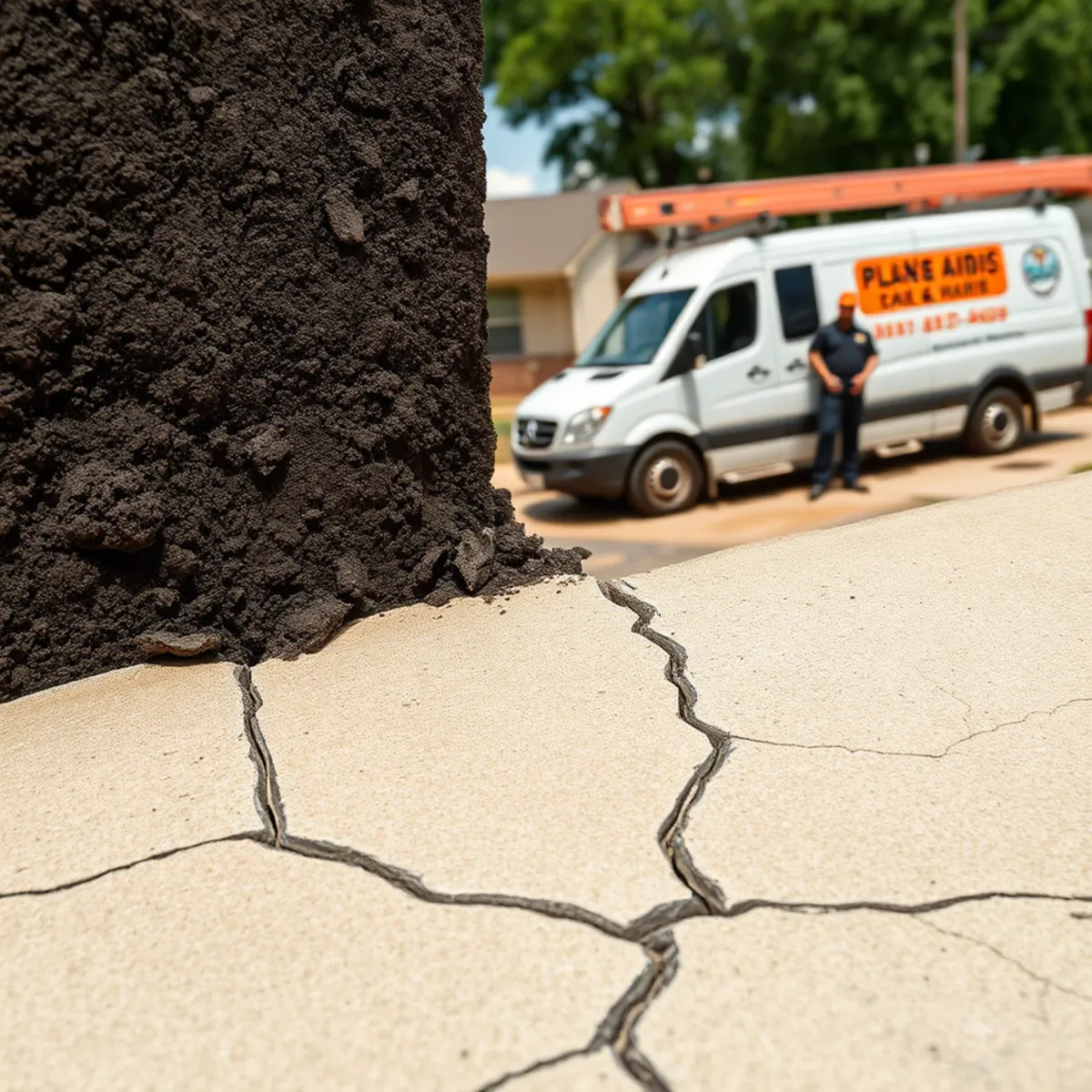
Crack a slab open in Bellaire and the pipe underneath rarely failed because it was cheap or old. It failed because the ground moved. Houston sits on a belt of expansive clay that swells when it rains and shrinks when it doesn't, and that constant motion is one of the most common causes of slab leaks and foundation cracks we see across the city.
Homeowners usually notice the symptoms — a hairline crack across the tile, a door that suddenly sticks, a water bill that climbs for no obvious reason — long before anyone mentions the soil. Understanding what black gumbo actually does underneath a slab makes those symptoms make sense, and it changes how you react to them.
What Black Gumbo Actually Is
Geologists call it the Beaumont Formation — a band of Pleistocene-era clay, silt, and sand laid down by ancient rivers and coastal flooding across the Gulf Coastal Plain. Locally, people just call it black gumbo: a heavy, dark, fine-grained clay that turns slick and sticky when wet and rock-hard when dry. Almost all of Harris County sits on some version of it, including every square mile of Bellaire.
What makes gumbo clay a plumbing problem instead of just a gardening headache is its particle structure. The clay platelets are small enough, and shaped in a way, that lets them absorb water and swell dramatically, then release it and shrink just as dramatically. Sand or loam soil doesn't move like this. Gumbo does, every single year.
None of this is unique to Bellaire specifically — the same Beaumont Formation runs under most of the inner loop and well beyond it. What concentrates the effect here is the combination of old housing stock and heavy tree canopy, which is a different mix than you'd find in a newer, less-landscaped suburb further out.
The Shrink-Swell Cycle That Cracks Slabs and Pipe Joints
Houston's weather is built to aggravate this cycle. Spring brings heavy rain that saturates the clay and swells it upward. Summer brings weeks of heat and little rain, and the same clay shrinks, pulling away from the slab edge and cracking into fissures you can sometimes see running across a dry yard. The ground under your house is expanding and contracting like a very slow, very heavy accordion.
A concrete slab doesn't bend gracefully. When the soil beneath one section swells while another stays dry — common along the shaded side of a house, or near a foundation with a tree pulling moisture from one corner — the slab experiences differential movement instead of settling evenly. Rigid pipe running through or under that slab, whether it's old copper or the cast iron and galvanized steel common in Bellaire's postwar homes, gets stressed at every joint and fitting. Eventually a joint separates or a pipe wall fatigues, and you have a slab leak.
Why Bellaire's Older Homes Feel It the Most
Most of Bellaire's original housing stock dates to the 1940s through the 1970s — ranch homes built on grade-beam slabs with the water and drain lines poured directly into or under the concrete. Every one of those homes has now been through fifty-plus years of the same annual shrink-swell cycle. That is decades of cumulative fatigue on pipe joints that were never designed to move.
Mature trees make it worse. Bellaire's tree canopy is one of the neighborhood's best features, but a large oak can pull hundreds of gallons of water out of the soil on a hot day, drying the clay unevenly on that side of the house while the sunny side stays comparatively wetter. That kind of lopsided drying is a classic setup for the corner cracks and warped door frames homeowners bring to us. It isn't unique to Bellaire, either — the same Beaumont Formation clay runs under most of Harris County, which is why slab movement is one of the most common service calls we run across the entire area, not a quirk of any one street.
Foundation Work and Slab Leaks: Why Sequence Matters
A lot of Bellaire homeowners call a foundation repair company first, because the visible symptom is a crack or a sticking door, not an obvious plumbing complaint. That order can backfire. If a slab leak is actively saturating the soil under one section of the house, piering or leveling that section before the leak is fixed means lifting a foundation on ground that's still being fed by a broken pipe — the movement often continues, sometimes worse, right after the foundation work wraps up and the invoice is paid.
What we actually recommend: before any foundation leveling begins, have the plumbing system pressure-tested. If it holds pressure, the foundation company can proceed knowing the soil movement is coming from the clay cycle alone. If it doesn't hold, locate and repair the leak first, let the soil stabilize for a few weeks, then level the slab. Our residential plumbing team coordinates directly with foundation repair companies on this sequencing regularly — it's the difference between paying for foundation work once or paying for it twice.
Not every foundation company will wait for a plumber's all-clear, and not every plumber volunteers to coordinate with a foundation crew unprompted. It's worth asking both directly whether they've handled this sequencing together before, rather than assuming it's already part of the plan.
Warning Signs Worth Taking Seriously
- Stair-step cracks in exterior brick or interior drywall, especially near corners or window frames
- A door or window that suddenly sticks, drags, or won't latch the way it used to
- A section of flooring that feels warm underfoot with no heating vent nearby
- A water bill that climbs month over month with no new fixtures and no visible leak
- A crack that telegraphs through tile grout in a straight line across a room
Slab Leak Repair Options, Compared
Once electronic detection has pinpointed a leak, there are three realistic ways to fix it, and the right one depends on where the leak sits, how many leaks turn up, and the age of the surrounding pipe.
Whichever option ends up right for your situation, get the recommendation from a plumber who's actually run a camera and pressure test on your specific system, not a generic call based on the home's age alone — two houses built the same year on the same block can have completely different pipe conditions underneath them.
- Spot repair (small concrete cut): fastest and least invasive when there's a single, precisely located leak in otherwise sound pipe — usually a day's work and the smallest possible patch to the slab
- Tunneling from the slab edge: avoids cutting through interior flooring or tile entirely by accessing the line from underneath the perimeter — often the better call when the leak sits under finished floors you don't want to disturb
- Overhead reroute: abandons the damaged section of under-slab pipe and runs new PEX through the attic and down through a wall instead — the standard recommendation when a run is old galvanized or copper with multiple leak points, since it sidesteps the slab, and the clay under it, going forward
- Full repipe: warranted once several leaks turn up across a home's original pipe, which is common when galvanized or copper lines pass the 40-to-50-year mark — a full repiping job typically runs in the $4,000 to $10,000 range depending on home size and access
Protecting the Slab You Already Have
The goal isn't a soaked yard; it's steady moisture so the clay isn't swinging between saturated and bone-dry every few months. Pay particular attention to the side of the house shaded by large trees, since that's usually where differential drying is worst.
If you already suspect a slab leak — a warm spot, a phantom water bill, the sound of running water with everything off — don't wait for it to announce itself with a wet carpet. Electronic slab leak detection & repair uses acoustic listening equipment and pressure testing to locate a leak within a foot or two, so the repair means cutting a small access point instead of opening the whole slab.
Expert tip: Consistent foundation watering — a soaker hose run about 18 inches from the foundation, a couple of times a week in dry stretches — keeps clay moisture more stable year-round. It won't undo existing damage, but it slows new movement.
Frequently Asked Questions
What is black gumbo clay?
How do I know if my foundation issues are related to plumbing?
Does watering my foundation actually help prevent slab leaks?
Is expansive clay just a Bellaire problem?
Should I fix the foundation or the plumbing first?
Written by the Plumber Bellaire TX team
Licensed Texas master plumbers based on Newcastle Street in Bellaire. We’ve spent years working the slab leaks, repipes, and sewer lines this article covers — right here in the City of Homes.
(614) 830-0578