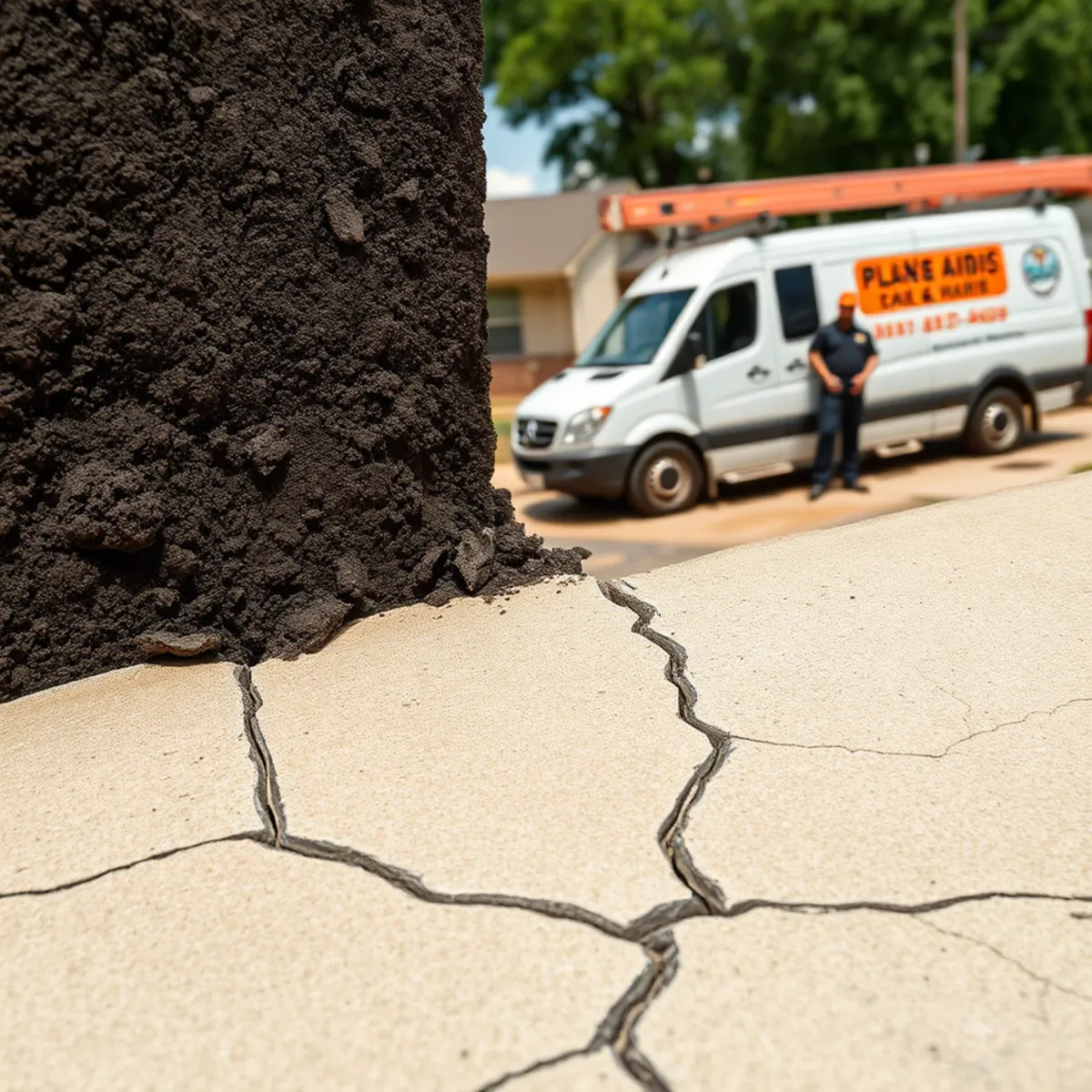

Bellaire sits on Beaumont Formation clay — the "black gumbo" that swells when it rains and shrinks when it is dry. That constant movement is hard on the water lines running under your slab, and in older homes with aging copper or galvanized pipe, it is the number-one cause of slab leaks in this city.
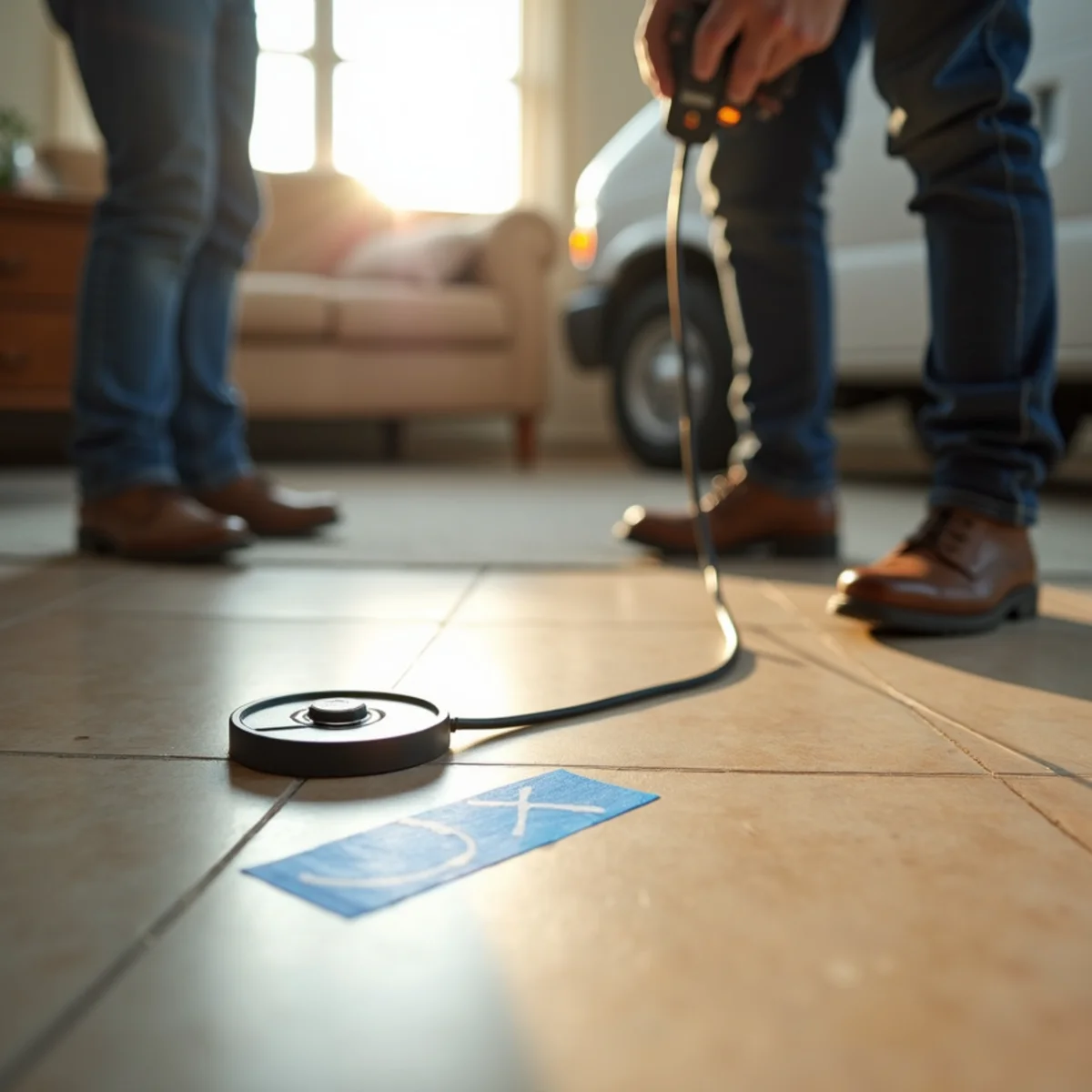
The most expensive way to find a slab leak is to wait until you see the damage. We use electronic and acoustic detection to pinpoint the leak first, so we cut one small, precise access hole instead of jackhammering across the room hunting for it.
If your water bill jumped for no reason, you feel a warm spot on the floor, or you hear water running with everything off — call us. Catching it early is far cheaper than repairing flooring and foundation damage later.
How to Spot a Slab Leak Early
The earliest signs are cheap to catch — the later ones are expensive:
- A sudden, unexplained spike in your water bill
- A warm spot on the floor (a hot-water line leak)
- The sound of running water when every fixture is off
- Cracks appearing in flooring, tile grout, or baseboards
- A damp, musty smell in one specific room
- Low water pressure that developed gradually
What Our Slab Leak Service Includes
Detection comes first, because it determines everything else about the job:
- Acoustic and electronic leak detection to pinpoint location and depth
- Line isolation testing to confirm an active under-slab leak versus a fixture or water heater issue
- A single, precise access cut instead of exploratory demolition
- Copper or PEX spot repair at the confirmed leak site
- Reroute option — running a new line overhead or through a wall chase instead of back under the slab
- A pressure test to confirm the repair holds before we close anything up
- Photo and video documentation to support an insurance claim
- A clean patch of the access point once the repair is complete
How We Find and Fix a Slab Leak
Precision first — because every unnecessary hole in your slab costs you:
- 1
Confirm the leak
We isolate the system and confirm you have an active under-slab leak — not a fixture, water heater, or irrigation issue.
- 2
Pinpoint electronically
Using acoustic and electronic leak-locating equipment, we mark the exact location and depth of the leak before touching the slab.
- 3
Choose the right repair
For an isolated pinhole we do a targeted spot repair through a single small access point. For a deteriorated line we discuss rerouting or repiping that section instead of chasing repeated leaks.
- 4
Repair and restore
We complete the repair, verify it holds, and restore the access point cleanly.

Spot Repair vs. Reroute: The Honest Trade-off
A single pinhole leak in an otherwise sound line is a straightforward spot repair — open one access point, fix the pipe, done. But if the line under your slab is old copper or galvanized that has already leaked once, patching one spot often just means you are back in a few months for the next pinhole.
In those cases we will talk to you honestly about rerouting the line overhead or repiping that run, so you are not paying to jackhammer your slab again and again. Which path is right depends on the pipe’s condition and how many leaks you have had — and we will show you the evidence, not just a sales pitch.
Expert tip: Insist on electronic leak detection before anyone opens your slab. Pinpointing the leak first minimizes the number of holes cut — and that directly lowers your repair cost.
Why "Black Gumbo" Clay Causes So Many Bellaire Slab Leaks
The Beaumont Formation clay under Bellaire has a high plasticity index — it expands dramatically when saturated and contracts when it dries out. Through Houston’s wet-dry cycles, that movement flexes everything embedded in and under the slab, including your water lines. Rigid pipe does not like being flexed thousands of times. Combine that with 50-to-70-year-old copper or galvanized pipe and you have the exact recipe for the slab leaks we see across the city every week.
The Real Cost of Waiting on a Slab Leak
A slab leak does not stay small. Water finds the path of least resistance — up through a hairline crack in the concrete, under flooring, into a wall cavity — and every day it runs is a day of wasted water and slowly spreading damage. Tile grout cracks, laminate flooring bubbles, and drywall wicks moisture up from the baseboard long before most homeowners realize what is actually happening under the floor.
Left long enough, standing moisture under a slab becomes a mold problem, and the water washing through the sub-base can erode the soil supporting your foundation — turning a plumbing repair into a plumbing repair plus a flooring replacement plus, in bad cases, a foundation conversation. Catching it at the unexplained-water-bill stage is dramatically cheaper than catching it at the buckled-floor stage.
Supply Line or Drain Line? Two Different Slab Leaks
Most of what people call a "slab leak" is a pressurized supply line — hot or cold copper or galvanized pipe under constant pressure, which is why it shows up fast as a warm spot or a spiking water bill. Electronic and acoustic detection is built for exactly this: the equipment listens for the sound of pressurized water escaping and triangulates the source.
A leak in a drain line under the slab behaves differently — it is not under pressure, so it tends to show up slower, as a persistent damp smell or a soft spot rather than a warm floor or a bill spike. Cast iron drain branches under a slab can crack from the same clay movement that cracks supply lines, and because drain pipe has to hold a slope to drain properly, the repair sometimes calls for a different approach than a simple supply-line spot fix. We identify which type you have before recommending a method.
Ready for slab leak detection & repair in Bellaire?
Same-day service on most calls · 24/7 emergency line.
4.9/5 · 137+ reviewsLicensed Texas Master Plumber
What Affects Slab Leak Repair Cost
Detection and repair are usually priced separately, because pinpointing the leak first is what keeps the repair affordable. Cost depends on:
- Whether it is a supply line or drain line leak
- The depth and accessibility of the leak under the slab
- A targeted spot repair vs. rerouting or repiping the line
- How much flooring restoration is involved
- Whether more than one leak is present
Because we detect before we dig, most homeowners open the slab in exactly one spot — the single biggest factor in keeping the total down.
Why Bellaire Homeowners Choose Plumber Bellaire TX for Slab Leak Detection & Repair
A slab leak hides under a foundation you cannot see through, so the detection equipment does the work your eyes cannot — we pinpoint the leak electronically before we ever cut into your floor.
Slab Leak Detection & Repair Across Bellaire & the Inner Loop
We run slab leak detection and repair across Bellaire and the surrounding clay-soil enclaves, where decades of expansive Beaumont clay movement make pinhole leaks a routine call. Explore your area for local details, or call (614) 830-0578.