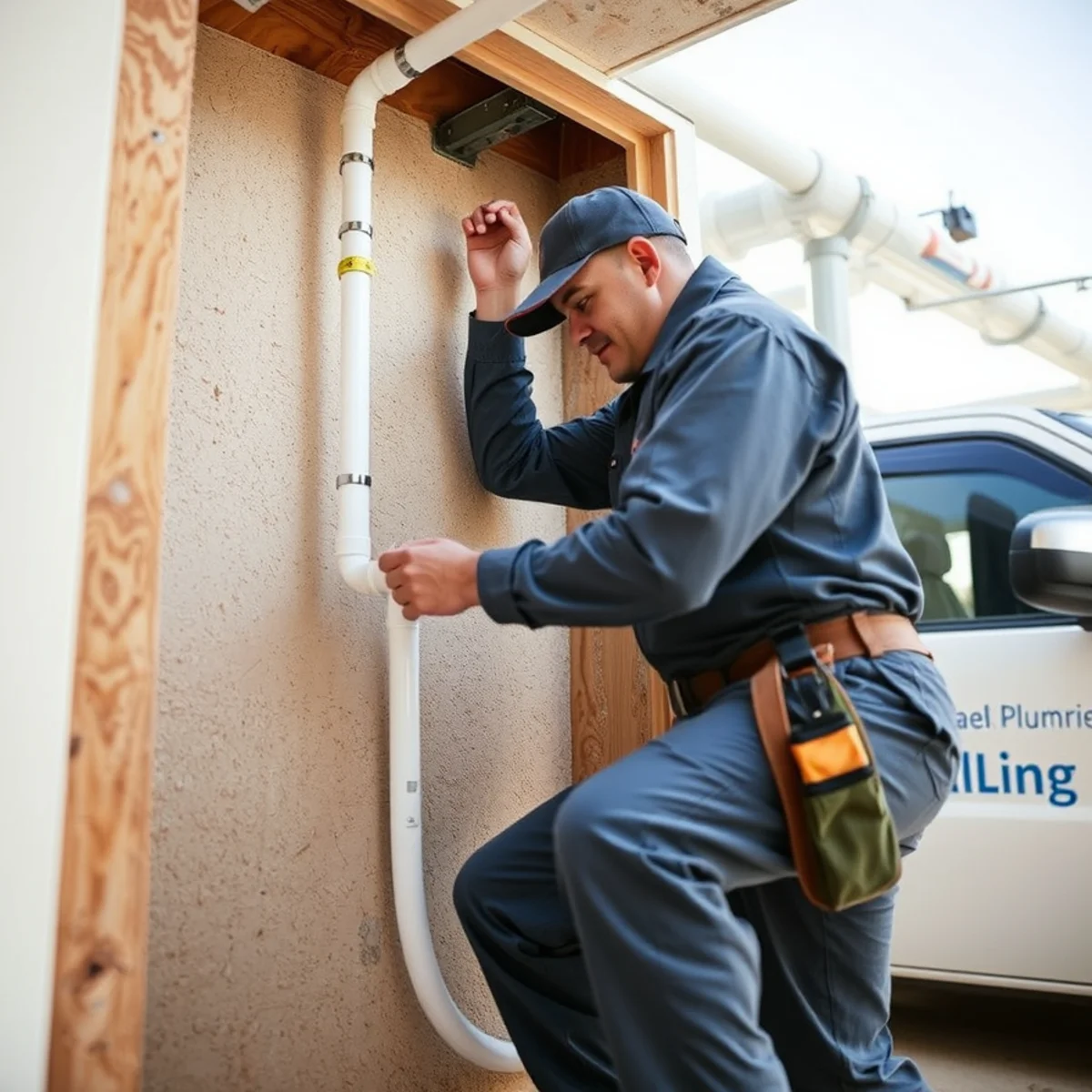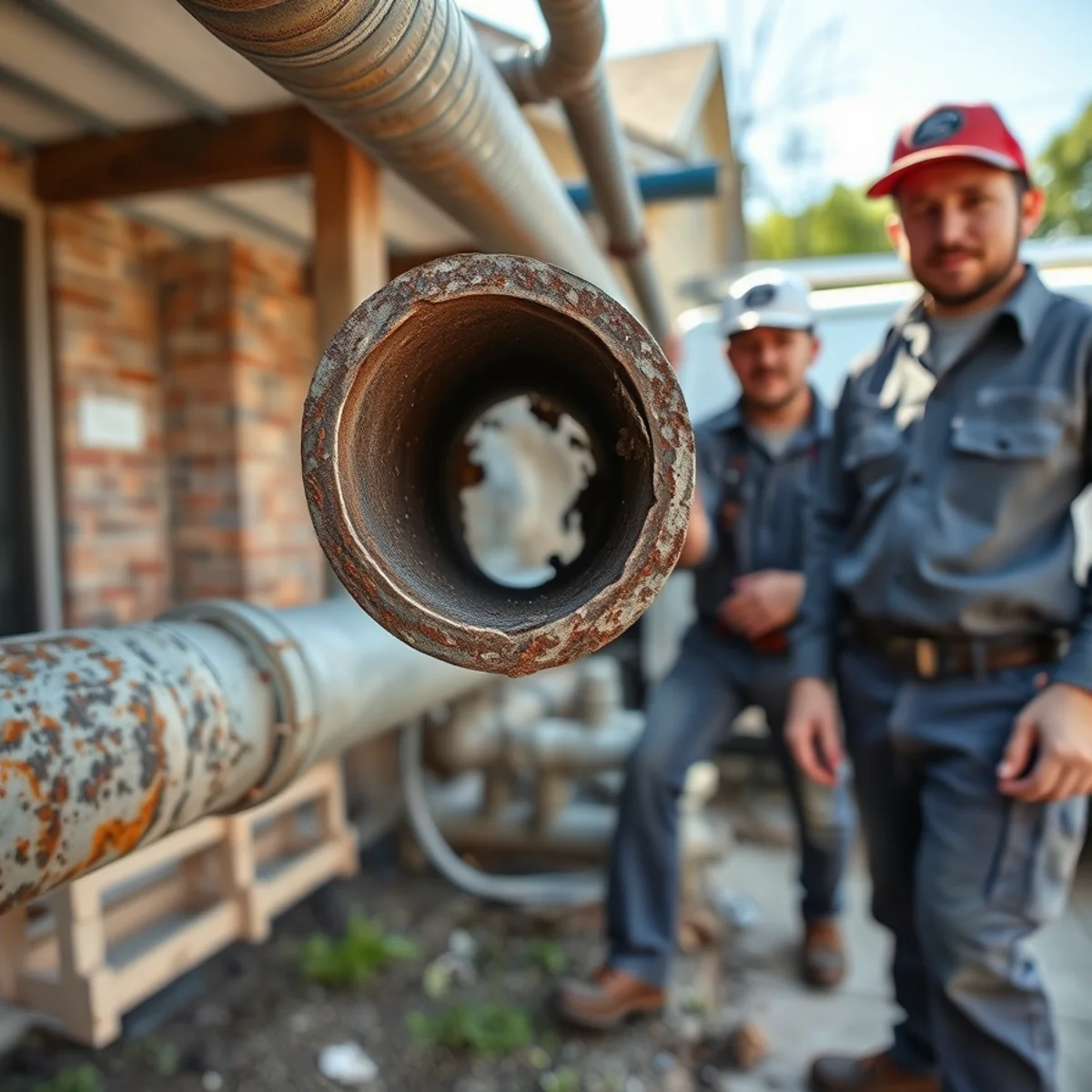

Copper is the pipe most people picture when they say "real plumbing," and the reputation is earned. Properly installed copper supply lines routinely last 50 years or more, handle heat that would soften plastic, and carry a service record that stretches back generations in Houston-area homes.
It is also the more expensive repipe, and it is not bulletproof. Some Bellaire houses have copper that started pinholing at 25 or 30 years, and rigid pipe has no give when our black gumbo clay moves the foundation underneath it. This page covers copper on its own terms: the pipe grades, the trade-offs we will not gloss over, and the houses where we would steer you toward PEX-A instead.
We install both materials, so the estimate you get is for the pipe that suits your house, not the one that is easiest for us to stock. Call for a repipe assessment and we will write up a copper pipe replacement quote you can set beside a PEX-A quote, line by line.
Signs You Are Facing a Copper Repipe Decision
Aging copper gives warnings long before it fails outright, and a few of these also help decide which material should replace it:
- Pinhole leaks in 30- to 50-year-old copper: damp drywall, a ceiling stain, or a hissing line inside a wall
- Blue-green crust on fittings and joints, or a blue-green tint left in sinks and tubs
- Two or more copper repairs in the same house within a few years
- Copper installed before 1986, when lead-tin solder was still in common use at the joints
- Original galvanized lines (low pressure, rusty hot taps) in a home where you want a metal system again
- An inspector’s note on aging supply lines before you list the house
What Our Copper Repiping Service Includes
A copper repipe is won or lost in the details, so the details are written down before we start:
- Pipe inspection, pressure and flow testing, and a written estimate that names the copper type and pipe size for every run
- Type L copper water lines throughout the house (Type M only where you choose it, and only in writing)
- Lead-free soldered joints, or press-connect fittings where an open flame does not belong, with every cut end reamed and cleaned
- Dielectric fittings wherever new copper meets steel, galvanized, or the water heater
- Isolating hangers and sleeves at framing penetrations, so hot lines never tick or rub through the night
- New shutoff valves and angle stops at every fixture, and a tie-in to the water heater
- A full pressure test before any wall closes, then a flush of every line before sign-off
- City of Bellaire permit, inspection scheduling, and drywall patching and paint at every access point
How a Copper Repipe Goes, Start to Finish
Rigid pipe rewards planning, because every turn is a fitting and every run needs support:
- 1
Inspect the pipe and the water history
We inspect what you have, check static pressure and flow, and ask about stains, taste, and past leaks. If pinholes brought you here, we talk through what that history says about your water before recommending copper a second time.
- 2
Specify the pipe in writing
Your estimate names the copper type (Type L unless you choose otherwise), the pipe size for every run, and the routing, usually overhead through the attic and down interior walls.
- 3
Install, isolate, and test
We ream and clean every cut end, solder with lead-free solder or use press-connect fittings where an open flame does not belong near dry framing, hang the pipe on isolating supports, and fit dielectric connections wherever copper meets steel. The finished system is pressure-tested before a wall closes.
- 4
Permit, flush, and restore
We pull the City of Bellaire permit, flush every line so flux and cutting debris never reach a faucet, then patch and paint the access openings.
Why Homeowners Still Choose Copper
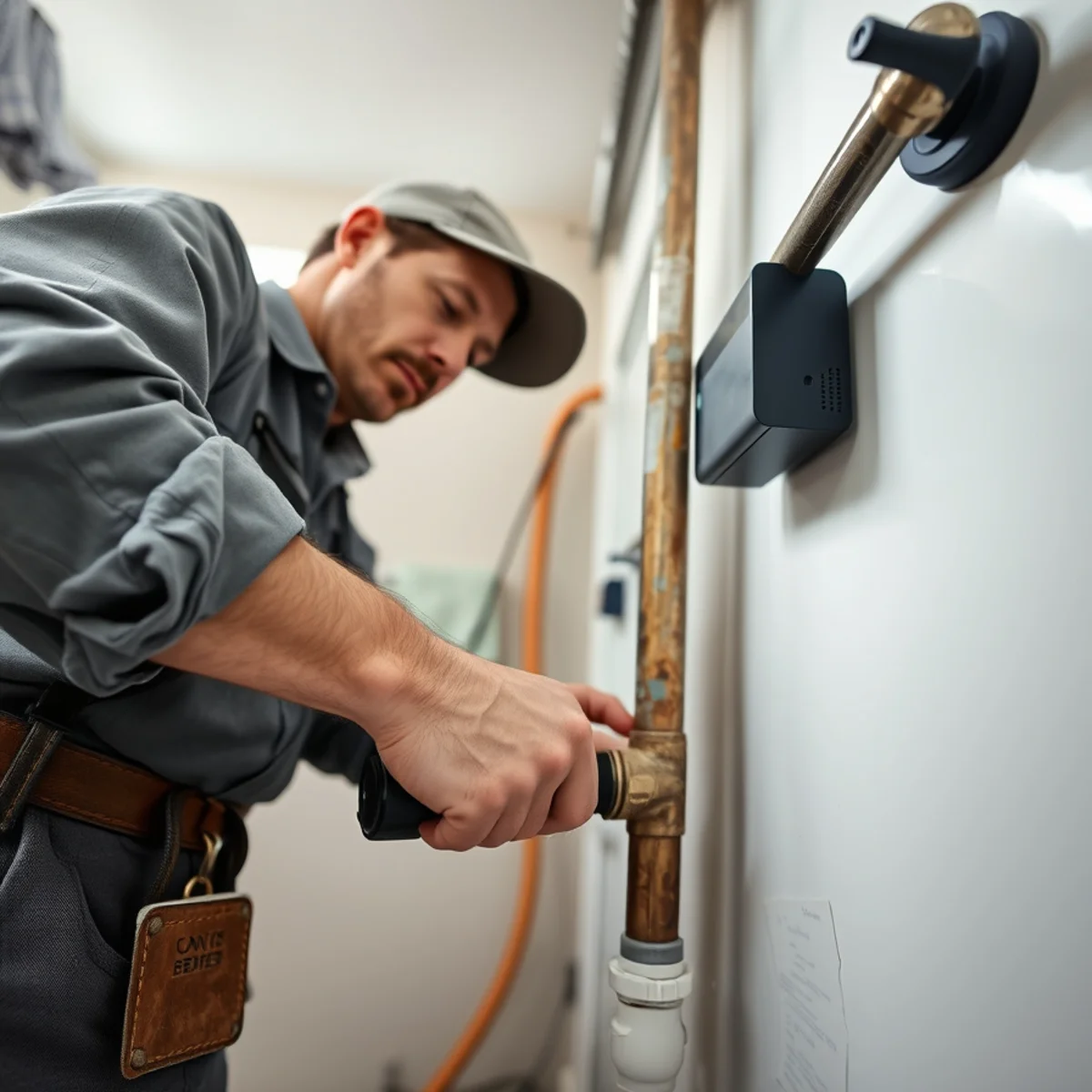
Track record is the first reason. Copper has been the standard residential supply pipe for generations, and plenty of Bellaire homes still have copper from a 1960s addition running without complaint. A clean, correctly sized system routinely goes 50 years or longer, and no plastic pipe has that much history behind it yet.
Toughness is the second. Copper has no practical temperature limit in a household system, so it sits comfortably beside a water heater, a recirculation loop, or a gas flue. Sunlight does not touch it, a stray hammer blow dents it instead of splitting it, and rodents cannot chew it, which is why it remains the right pipe for exposed garage walls, mechanical rooms, and the first stretch off the heater.
Perception is the third, and it is real even if it is not rational. Some buyers and agents read copper as the premium plumbing material, a view that carries the most weight in Bellaire’s remodeled and rebuilt blocks. Any permitted repipe takes original galvanized out of the negotiation; copper simply adds a reputation on top.
Type L vs. Type M: The Line in Your Quote That Matters
Both are the same copper; the difference is wall thickness. Type L has roughly 40 percent more wall than Type M at the common ½- and ¾-inch sizes, and it is the grade we specify for residential supply. Type M is thinner and cheaper per foot, and code allows it in many residential jobs, which is exactly why it shows up in the lowest bids. Type K, the thickest, is mostly reserved for buried service lines and rarely belongs in a house repipe.
Wall thickness matters because copper fails from the inside out. Pitting and erosion eat the wall over the years, so a thicker wall buys more years before a pit breaks through, and it resists the dents, nail strikes, and tight bends that stress thin pipe. If a budget pushes you toward Type M on low-risk runs, we tell you exactly what that saves and what it trades, and the estimate states which grade goes where.
Expert tip: Ask every copper bidder, "Is that Type L?" A quote that does not name the wall thickness cannot be compared with one that does, and the gap is often the whole price difference.
Copper’s Real Trade-Offs in a Bellaire Home
Cost comes first. Copper takes more fittings (an elbow at every turn), slower joint work, and more careful routing than flexible tubing, so a copper repipe usually adds a day or more and opens more wall than the same house in PEX-A. The metal also trades on the commodities market, which is why copper quotes carry a shorter shelf life.
Pinholes are the trade-off nobody likes to discuss. Copper does not fail at random. Pitting corrosion follows water chemistry (pH, alkalinity, the disinfectant residual, dissolved minerals), water temperature, flow velocity, and workmanship, including flux residue and burrs left inside the pipe. Houston-area water is moderately hard and disinfected, and its chemistry shifts with the supply source and the season. In that profile many copper systems last for decades and others pit in 25 or 30 years. We cannot promise your water behaves, so if your existing copper pinholed early, we will say so plainly and put PEX-A on the table.
Rigidity is the last one. Clay swells and shrinks with every wet-dry cycle, and that movement concentrates at rigid points: the line entering the house, each slab penetration, and any pipe clamped tight to framing. We route copper overhead, leave it free to float in oversized framing holes, and add offsets where long runs need them, which absorbs most of the movement. It is still a design problem that PEX-A repiping does not have. And if the leak that started this conversation was under your slab, our slab leak detection and repair page explains why rerouting overhead is often the permanent answer.
Expert tip: If your old copper pinholed in under 30 years, treat that as information about your water, not bad luck. Ask any plumber, us included, to explain why the next copper system will behave differently.
Copper vs. PEX Repipe: When Each Is the Right Call
Both are code-approved, and either one beats failing galvanized by a wide margin, so this is a practical decision rather than a right-or-wrong one. Our whole-house repiping page walks through the overall process; this is the copper-specific call.
PEX-A tends to win on installed cost, speed, and flexibility. It cannot pit, it moves with the clay, and it hides far fewer joints inside your walls. For a plaster-walled 1950s bungalow on a budget, or a house whose copper already pinholed, our PEX repiping page makes the case for it. Copper is the stronger choice in these situations:
- Exposed runs. Garage walls, mechanical rooms, hose-bib stubs, and the first stretch off the water heater.
- Matching sound copper. The house already has good copper from an addition, and only the failing remainder needs replacing.
- Track record over price. You want the longest-proven pipe, or buyers in your block expect it.
- Water that has treated copper well. Your existing copper made it 40-plus years without pinholes.
Expert tip: Many Bellaire repipes end up hybrid: PEX-A through the walls and attic, copper where the pipe is exposed or meets the water heater. Code-approved transition fittings join the two, so each material works where it performs best.
Ready for copper repiping in Bellaire?
Same-day service on most calls · 24/7 emergency line.
What Affects Copper Repiping Cost
A whole-home copper repipe in the Bellaire area typically runs about $6,000 to $15,000, noticeably above the roughly $4,000 to $10,000 we see for PEX-A on the same house. Where you land depends on:
- Home size, bathroom count, and whether the house is one story or two
- Type L vs. Type M, and pipe sizing (upsizing an old ½-inch trunk to ¾-inch adds material)
- Slab vs. pier-and-beam, and how much wall and ceiling has to be opened for rigid runs
- The copper market on the day you sign, since the metal price moves and quotes carry a shorter shelf life
- Drywall and paint restoration (ours is included) and City of Bellaire permit costs
These are typical market ranges. We confirm your exact number in a written, itemized estimate that names the copper type, the sizes, and exactly what is and is not included, so you can set it beside a PEX-A quote line by line.
Why Bellaire Homeowners Choose Plumber Bellaire TX for Copper Repiping
Copper’s lifespan is decided by details a homeowner never sees: a burr left in a cut end, flux left in the line, thin-wall pipe quoted as thick. We name the grade in writing, and our licensed Bellaire master plumbers supervise the joints that decide how long your system lasts.
Copper Repiping Across Bellaire & the Inner Loop
We install copper supply systems across Bellaire and the surrounding Inner Loop enclaves, from original 1950s galvanized bungalows to 1970s homes whose first-generation copper is now pinholing. Explore your area for local details, or call (614) 830-0578.