Galvanized Pipes in Pre-1960 Bellaire Homes: Why Low Pressure Means It's Time
Water pressure that's quietly dropped over the years, a shower that used to feel strong and now feels like a drizzle, especially upstairs, gets blamed on the city, an aerator, or a fixture, and homeowners often replace the wrong thing first before the real cause turns up.
If your home still has its original galvanized steel supply lines, the pipe itself is the problem, and it only moves in one direction: worse. Here's the mechanism behind it, and how to tell whether repiping is actually warranted or something simpler is going on.
How Galvanized Pipe Chokes Itself From the Inside
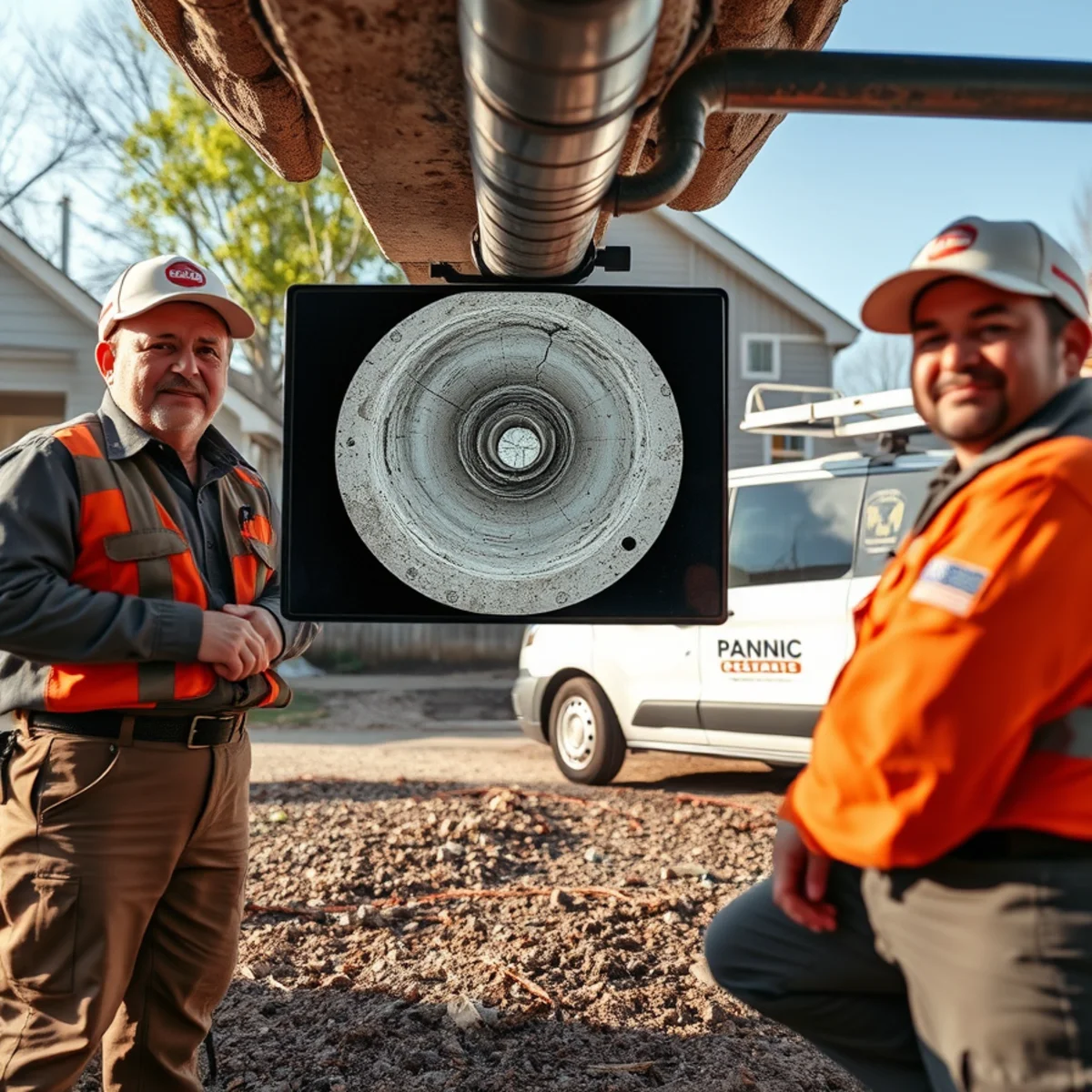
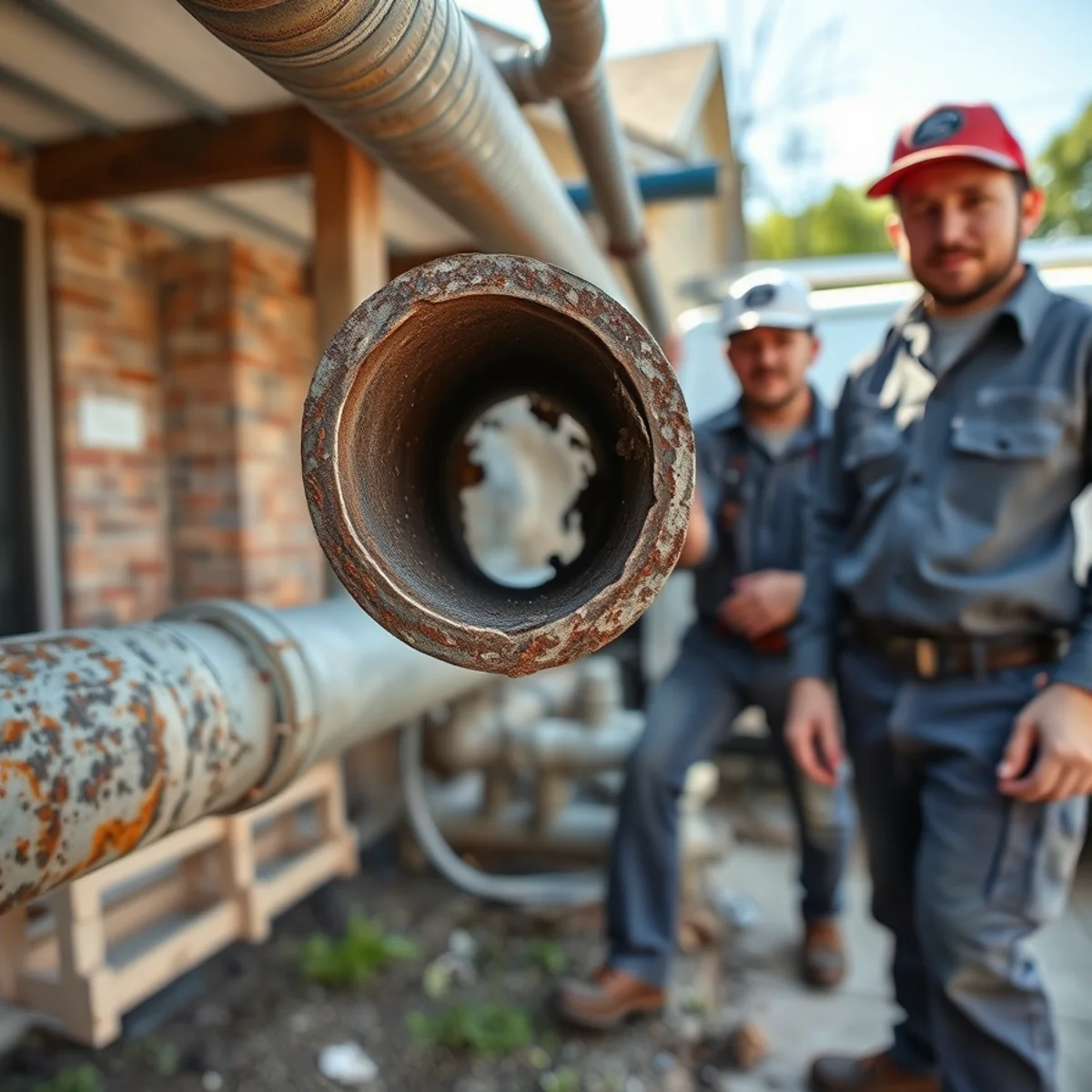
Galvanized supply pipe is steel with a zinc coating meant to prevent rust. Over decades that zinc layer wears away from the inside, especially at the areas of highest flow, exposing bare steel to the water running through it constantly. That exposed steel corrodes, and Bellaire's moderately hard water deposits minerals onto the rough corroded surface even faster than it would on smooth pipe.
It's the same basic process that narrows old cast iron drain lines, just happening on the pressurized supply side instead. A pipe that was three-quarters of an inch inside can function like it's an eighth of that after 60 or 70 years, and every fixture downstream of the worst sections feels it as weak pressure. Homeowners sometimes describe it as the shower "getting old" or the house just always having weak water, when in fact the pipe has been narrowing gradually enough that nobody noticed the specific month or year it actually changed.
Why It's Usually Worse Upstairs or at the Far End of the House
Pressure loss through a constricted pipe compounds with both distance and elevation, so fixtures furthest from the main or on a second floor typically show the problem first and worst. That pattern is actually a useful diagnostic clue: it points to corrosion distributed through the pipe network rather than a single bad fixture or valve.
In a single-story Bellaire ranch, the elevation factor mostly drops out, but distance from the main doesn't. A back bathroom or a kitchen added onto the rear of the house can show the same restricted-flow pattern a second floor would show in a taller home, just driven by pipe length instead of height. Either way, the diagnostic logic is the same: pressure loss that scales with how far the water has to travel points to the pipe itself, not the fixture at the end of it.
Ruling Out the Other Causes First
Before assuming it's the pipe itself, it's worth ruling out simpler explanations:
- Is it one fixture only? Check the aerator or cartridge before suspecting the whole system.
- Has anyone checked the pressure-reducing valve? A failing PRV can drop whole-house pressure on its own.
- Is there a running toilet or a hidden leak elsewhere pulling pressure away from other fixtures?
- Have neighbors mentioned anything, or is there known work on the municipal supply nearby?
How We Actually Diagnose It on a Service Call
Ruling out the obvious causes yourself is a good first step, but confirming galvanized corrosion as the actual cause takes a pressure test, not a guess. It only takes a few minutes with the right gauge, and it settles the question for good. Here's the sequence:
- 1Check static pressure at the main or an outdoor spigot closest to the meter, which shows what's actually arriving at the house before any interior pipe has a chance to restrict it.
- 2Check pressure at the affected fixture, both static and with water running elsewhere in the house, since a healthy system barely dips under simultaneous use while a constricted one drops sharply.
- 3Compare the two readings. A significant gap between the main and the fixture, especially one that gets worse the further the fixture is from the main, points to internal pipe restriction rather than a supply-side issue.
- 4Visually confirm pipe material at an accessible point, like the water heater connection, to verify galvanized steel rather than assume it from the home's age alone.
- 5Rule out a failing pressure-reducing valve, which can mimic pipe corrosion by dropping whole-house pressure evenly rather than progressively by distance.
- 6Check for a recent water heater or fixture replacement that could have introduced a partial obstruction unrelated to the home's main galvanized runs, ruling out a false positive before recommending a full repipe.
Repair Doesn't Fix Corrosion — It Just Moves the Failure Point
Patching a pinhole leak in galvanized pipe addresses that one spot, but it does nothing for the corrosion happening along the rest of the run. It's common to fix a leak, then get called back eight months later for a new leak a few feet away, because the pipe wall was never sound anywhere along that section. The first leak was just the first place it gave out. That's why a standalone burst pipe repair on galvanized line is best treated as a stopgap, not a fix, unless you're already planning to replace the rest of the run soon after.
Expert tip: A galvanized pipe leaking in one spot is corroded along its entire length. You're not looking at an isolated failure, you're looking at the first place it happened to show.
What Whole-House Repiping Actually Solves
Modern PEX-A supply lines replace corrosion-prone steel with a material that doesn't scale or rust from the inside, restoring full pipe diameter and, with it, normal pressure at every fixture. A typical whole-house repiping project runs two to four days, and it's the same conversation we have often with owners of similar-era homes in West University Place, where original galvanized supply lines are just as common as they are in Bellaire. Most homeowners notice the difference in the very first shower after the water's turned back on, not weeks later, since a constriction that built up gradually over decades disappears all at once rather than easing back slowly.
Partial Repipe vs. Whole-House: When Partial Actually Makes Sense
Whole-house repiping is the right answer most of the time, but not always, and it's worth being straight about when a partial repipe is genuinely reasonable rather than just a cheaper sales pitch. A partial repipe can make sense when only one isolated branch, say, a single bathroom added or rerouted at some point after the original construction, is on different pipe than the rest of the house and that section is the only one showing problems.
It stops making sense when the original galvanized trunk lines feeding the whole house are the source, which is the far more common scenario in a pre-1960 Bellaire home. In that case a partial repipe fixes pressure to one area while leaving the corroding backbone in place, and the next low-pressure call is only a matter of time. A whole-house PEX-A repipe in Bellaire typically runs $4,000 to $10,000, starting around $4,500 for a smaller home, and takes about two to four days from start to finish.
How to Confirm You Actually Have Galvanized Pipe
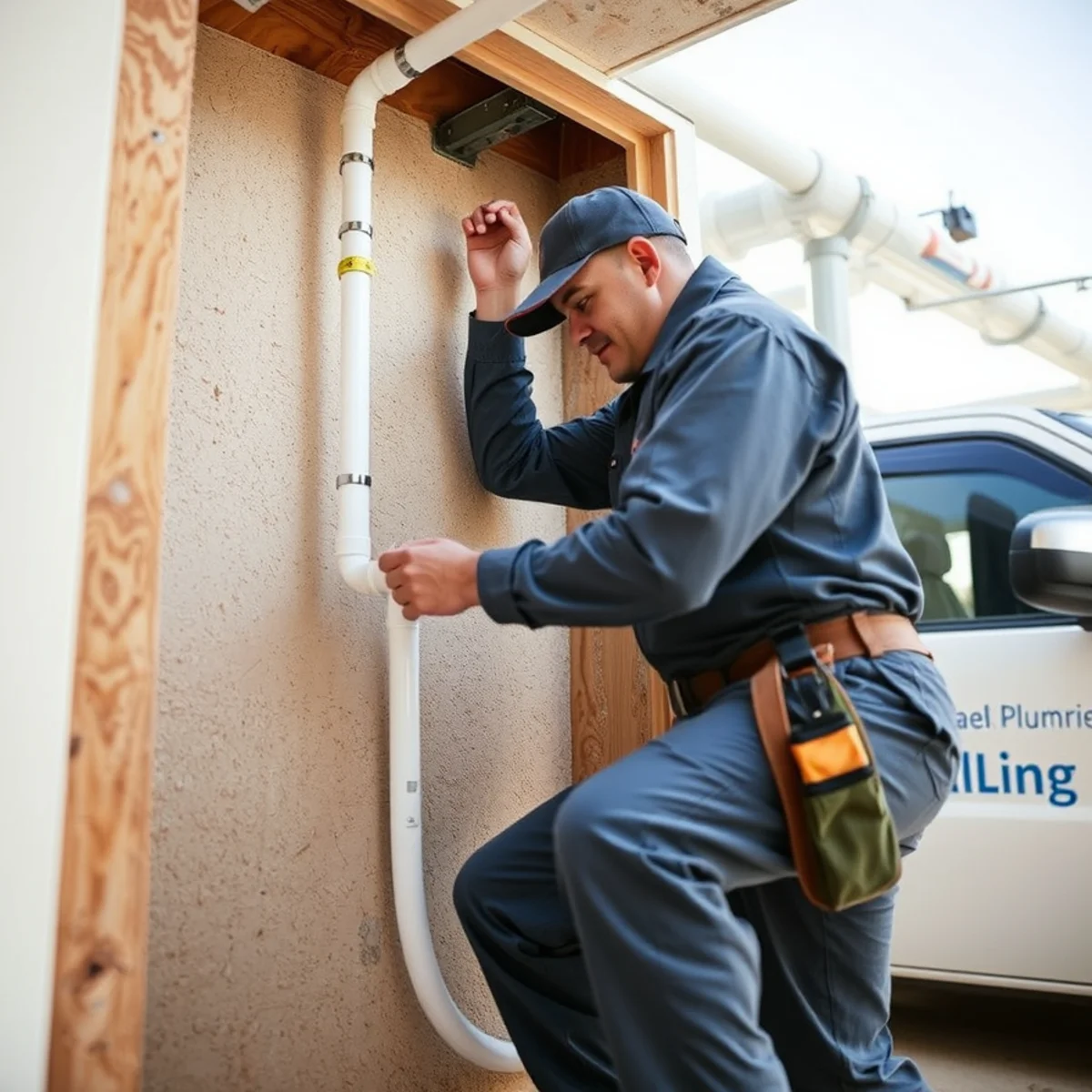
Homes built before about 1960 in this area commonly used galvanized steel for supply lines, but plenty have already been partially updated during a renovation, so age alone isn't proof. The most reliable check is visual: galvanized pipe is a dull gray metal, threaded at joints, and a magnet will stick to it, while copper is reddish and PEX is a flexible colored plastic.
The easiest place to look is where a pipe enters the water heater or comes up through a crawlspace or garage ceiling, since those sections are usually exposed. If you're not sure what you're looking at, that's a five-minute check we can confirm on any service call, galvanized or not. It's also common to find more than one material in the same house, a section replaced during a past renovation while the rest of the run stayed original, which is exactly why the visual check matters even in a home you assume is fully galvanized or fully updated.
Frequently Asked Questions
How do I know if my low pressure is from galvanized pipes and not something else?
Can you just replace the worst sections instead of the whole house?
Will repiping actually restore my water pressure to normal?
How long does a whole-house repipe take, and how disruptive is it?
Can I test my own water pressure before calling a plumber?
Written by the Plumber Bellaire TX team
Licensed Texas master plumbers based on Newcastle Street in Bellaire. We’ve spent years working the slab leaks, repipes, and sewer lines this article covers — right here in the City of Homes.
(614) 830-0578