How to Unclog a Toilet (and When It's Actually a Sewer Line Problem)
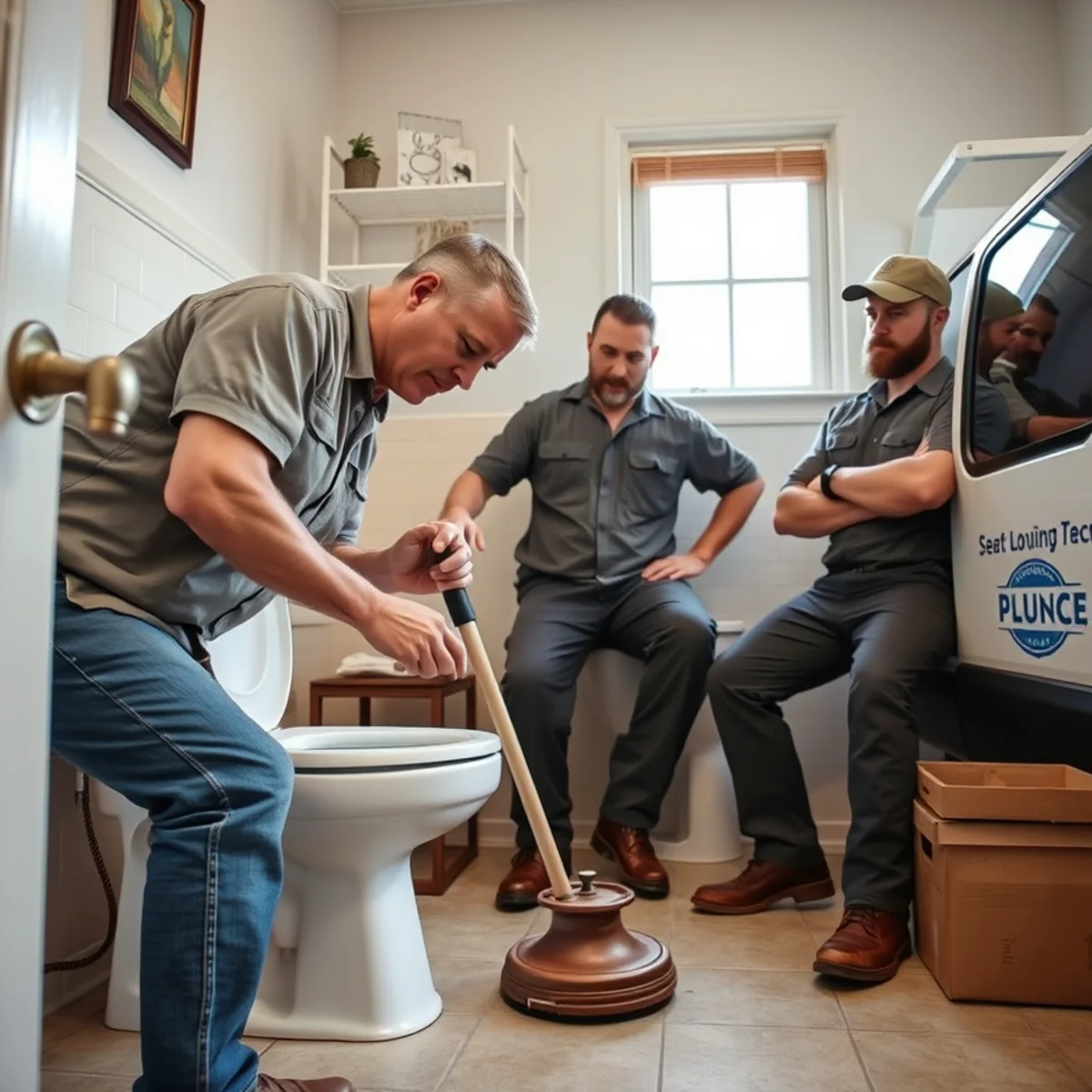
The toilet won't flush, the water's rising toward the rim, and the instinct is to panic. Most of the time that's an overreaction: a straightforward clog that's safe to clear yourself in a few minutes with the right technique.
But some "toilet clogs" are actually the first visible sign of a blocked main sewer line, and treating one like the other wastes time while the real problem gets worse. Here's the right DIY sequence to try first, and the specific signs that mean stop, this is bigger than the toilet.
Step One: Stop the Water From Rising Further
If the bowl is filling toward the rim, lift the tank lid and press the flapper down by hand to stop more water from entering the bowl, or reach behind the toilet and turn the supply valve clockwise to shut it off. Either one buys you time to work without an overflow.
If it's already overflowed onto the floor before you could stop it, treat that water as contaminated: wear gloves, keep pets and kids out of the room, and clean the area with a disinfecting cleaner once the clog itself is handled. A small overflow onto tile is a cleanup job; if it's reached carpet, padding, or drywall, that's worth a call regardless of how the clog gets resolved.
The Right Way to Plunge a Toilet
- 1Use a flange plunger, the kind with a folded rubber flap that extends from the cup, not a flat sink plunger, which won't seal properly against a toilet's curved trap.
- 2If the bowl is low, add water until the plunger head is fully covered.
- 3Press the plunger down gently first to push out trapped air, then form a firm seal over the drain opening.
- 4Plunge with firm, steady vertical strokes, eight to ten at a time, keeping the seal intact.
- 5On the last stroke, pull up sharply to break the seal and watch whether the water level drops.
- 6Repeat two to three full cycles before concluding that plunging alone won't clear it.
Mistakes That Make a Toilet Clog Worse
A few habits turn a five-minute fix into a bigger problem, or into damage that wasn't there before:
- Flushing repeatedly to try to force a clog through. It usually just pushes the bowl closer to overflowing and adds more water and waste to whatever's already blocking the trap.
- Using a flat sink plunger instead of a flange plunger. Without the extended flap, it can't form a seal against a toilet's curved trap, so every stroke just splashes instead of building pressure.
- Running a standard drain snake without a closet auger's protective sleeve. The bare cable can scratch or crack porcelain, which turns a clog into a fixture replacement.
- Pouring in chemical drain cleaner and then plunging anyway. That mixes caustic chemical with splashing water right at bowl height, which is a real safety risk, not just an ineffective combination.
- Ignoring a clog that clears partially and assuming it's solved. A toilet that drains slowly after "clearing" often has a partial blockage still narrowing the trap, and it's usually back within a day or two.
If Plunging Doesn't Work: The Closet Auger
A closet auger, sometimes called a toilet auger, is a different tool from a standard drain snake, built with a protective sleeve so the cable can navigate the toilet's trap without scratching the porcelain. Feed the cable in until you feel resistance, crank the handle to hook or break up whatever's causing the clog, then withdraw it slowly.
If the auger meets solid resistance at the same distance every time without ever clearing, or a full flush still won't drain after both a plunger and an auger, that's the point to stop the DIY attempts. Our toilet & fixture repair team can take it from there without risking damage to an older fixture.
The Signs It's Not the Toilet — It's the Main Line
Any one of these means the blockage is downstream of the toilet, and no amount of plunging or augering the toilet itself will fix it:
- More than one fixture backs up around the same time, such as a toilet plus a tub or a sink
- The lowest drain in the house, like a ground-floor shower or floor drain, backs up before or with the toilet
- Flushing the toilet makes water or air bubble up in the bathtub or shower
- Water backs up even though nothing has been flushed recently
- The clog comes back within days of being cleared
Expert tip: If flushing the toilet makes water rise in the bathtub, stop plunging. That's not a toilet clog, that's the main line telling you it's blocked downstream, and the toilet is just the fixture showing it first.
What We Check Before Recommending a Main Line Camera
Not every stubborn toilet clog needs a full sewer camera inspection, and we don't default to recommending one just to be safe. Here's what actually gets checked first:
- Whether other fixtures in the house are draining normally, run water in a sink or tub while watching the toilet for any reaction.
- How the home's cleanout is set up and whether it's accessible, since that determines how a camera inspection would even be performed if one's needed.
- The home's age and known pipe material, since original cast iron or clay laterals in a pre-1970s Bellaire home carry a much higher baseline likelihood of a main-line problem than newer PVC.
- Whether this is a first-time clog or part of a pattern, one isolated toilet clog with no other symptoms rarely justifies a camera; a repeat problem does.
- Whether standing water in the bowl is clear or carries a sewage odor. A strong odor alongside slow drainage elsewhere is a stronger indicator of a main-line issue than a simple clog on its own.
Expert tip: If a single plunge clears it and nothing else in the house acts up, that's genuinely just a toilet clog. The camera conversation only starts when the pattern or the other fixtures point past the toilet itself.
What to Do When It's a Main Line Backup
Stop using water in the house — no more flushing, no laundry, no dishwasher — since anything you send down the drain has nowhere to go and can make the backup worse. Call for sewer line repair so a camera can find exactly where the line is blocked and why, whether that's grease, roots, or a cast iron line that's finally failing after decades of service.
This distinction matters just as much in older housing stock outside Bellaire proper, including areas like Sharpstown, where similar-age sewer laterals are just as prone to the same kind of main-line blockages. The DIY steps above are the same regardless of where you live, it's the underlying pipe age and material driving the pattern, not the zip code.
Frequently Asked Questions
Why did my toilet clog even though I didn't flush anything unusual?
Is it safe to use chemical drain cleaner in a clogged toilet?
How can I tell if it's just my toilet or the whole line?
When should I call a plumber instead of continuing to plunge?
Why does my toilet clog more than other fixtures in the house?
Written by the Plumber Bellaire TX team
Licensed Texas master plumbers based on Newcastle Street in Bellaire. We’ve spent years working the slab leaks, repipes, and sewer lines this article covers — right here in the City of Homes.
(614) 830-0578