Hydro Jetting vs. Drain Snaking: Which Does Your Drain Need?
You have snaked this drain before, and now a plumber is asking whether you would rather have it jetted. It is the same pipe with two very different machines and a price gap in between. Choose wrong in one direction and you pay for a jetting that a ten-minute cable run would have handled. Choose wrong in the other and the clog returns within weeks, because the grease and scale on the pipe wall never went anywhere.
This is a straight comparison of hydro jetting and drain snaking for Bellaire homes: how each method works, what each does best, when jetting is the wrong call for old cast iron, how the costs compare, and the pattern of repeat clogs that tells you the pipe itself needs attention.
How Drain Snaking Works
A drain snake, also called a cable or an auger, is a coiled steel cable driven by a motor or a hand crank. The technician feeds it into the line through a fixture drain, a cleanout, or a roof vent, and the rotating head bores into the blockage. Depending on the head, it breaks the clog apart, hooks it so it can be pulled back out, or, with a bladed cutter, chops through roots. A hand auger suits a bathroom sink or a tub. A drum machine with a heavier cable handles a kitchen branch line or the main sewer lateral.
What a cable leaves behind matters as much as what it removes. It opens a channel only as wide as the cutting head, which is narrower than the pipe. Water drains again, but the film on the walls, whether grease, soap scale, rust scale, or root stubs, stays put. On smooth PVC that hardly matters. On a 70-year-old cast iron line it means the pipe is only partly clean, and the next clog starts with a head start.
How Hydro Jetting Works
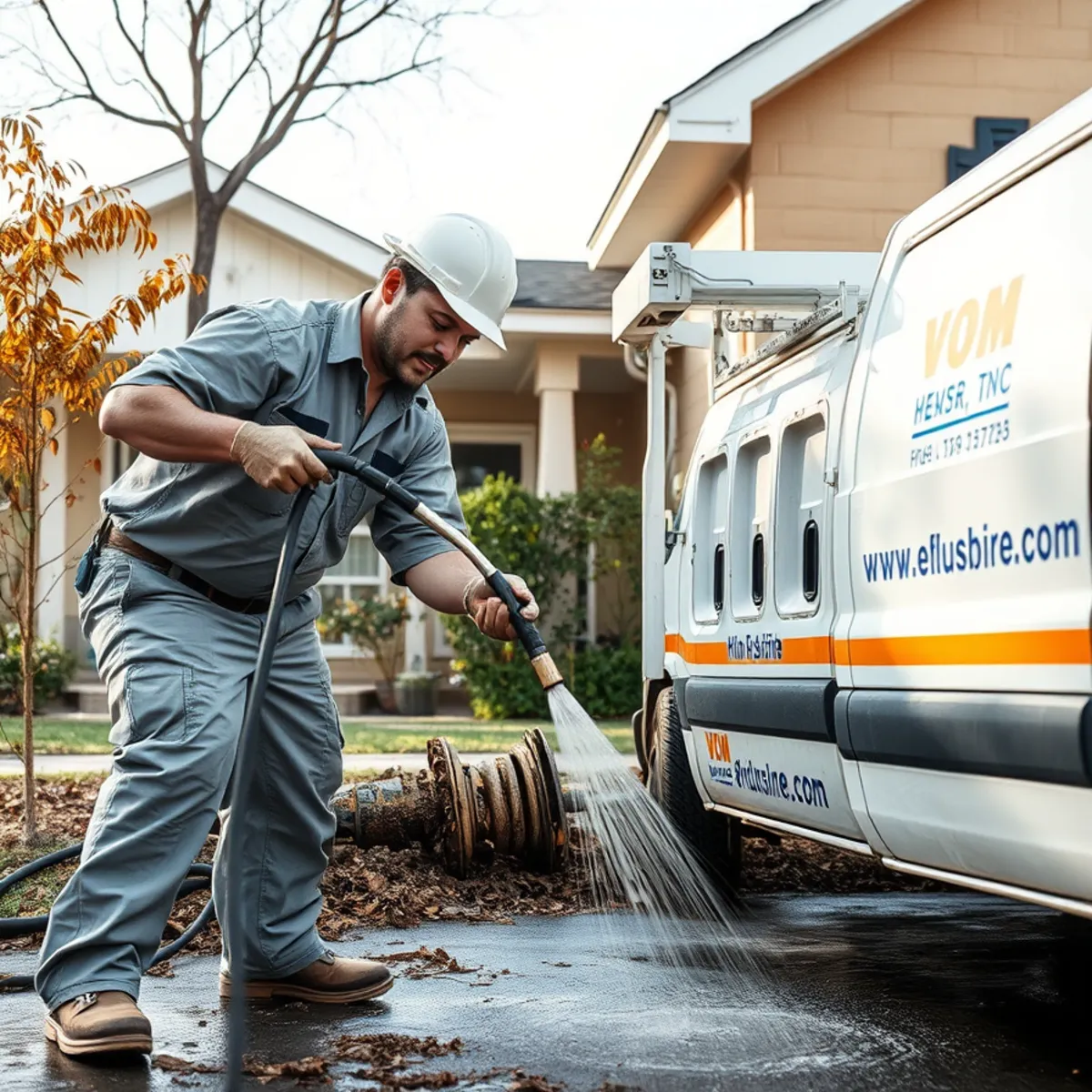
Hydro jetting swaps the cable for water. A pump sends water at high pressure through a flexible hose to a nozzle on the end. Several jets on the nozzle point backward, which pull the hose down the pipe, and a forward jet breaks into a blockage. As the hose is drawn back toward the cleanout, the spray scours the pipe wall around its full circumference and flushes everything it removes downstream.
The nozzle does much of the work: a penetrating tip for a hard plug, a rotating head for grease and scale, a cutting head for roots. Residential jetters commonly run somewhere between about 1,500 and 4,000 PSI. On older iron, a careful technician stays at the low end of that range or leaves the jetter on the truck, and more on that below. Jetting also needs water and a proper opening, usually a cleanout, a pulled toilet, or a roof vent, so setup takes longer than a quick cable run.
Why Bellaire's Older Homes Tilt the Decision
Three local conditions shape the choice. Most Bellaire homes built from the 1940s through the 1970s have cast iron drains and sewer laterals, and after decades the inside of that pipe is rough with scale, which gives grease and paper something to hold. The mature oaks that make the streets so shady send roots toward any joint that leaks even a little moisture. And the expansive clay under the whole city swells and shrinks with the weather, nudging joints a little further out of line each year.
The first two make heavy buildup likely, which favors jetting. The third makes fragile pipe likely, which is why the camera comes first.
Side by Side: What Each Method Does Best
Neither tool is better in general. Each wins on a particular kind of problem:
- A single soft clog: hair in a tub, paper in a branch line, a stoppage that has never happened before. A cable reaches it in minutes and costs less.
- Grease on the pipe wall: a cable bores through the middle of a grease collar and leaves most of it behind. Jetting shears it off the wall, which is why kitchen lines that keep coming back are jetting candidates.
- Mineral and rust scale: a cable passes through scale without touching it, because the problem is the rough wall rather than an object in the pipe. Jetting with the right nozzle clears loose scale and restores more of the pipe's working width, provided the iron underneath is sound.
- Tree roots: a bladed cable cuts a channel through a root mass quickly, which helps in an emergency. A jetter with a root-cutting nozzle clears more of the pipe's full width. Neither one repairs the crack or open joint the roots used to get in.
- Speed and price today: snaking is quicker and cheaper per visit. Jetting costs more per visit and usually buys a longer stretch between visits, on a line that can take it.
Expert tip: A rule of thumb: if the problem is a thing in the pipe, snake it. If the problem is the pipe wall itself, jet it. If you cannot tell which, that is what a camera is for.
When Snaking Is the Right Call
A cable is the efficient choice more often than a jetting pitch might suggest. It fits a first-time stoppage in one fixture, a slow tub or sink with hair as the obvious culprit, a toilet that needs an auger, and a main-line clog in a home with no history of backups, where the camera shows a clean pipe wall and a single obstruction. It is also the right opening move when a line has stopped completely and the first goal is getting water moving again.
Snaking also suits the newer parts of a house. A teardown-rebuild with PVC drains, or a bathroom replumbed in a recent remodel, has smooth pipe and no decades of scale. A cable clears the object, and there is nothing left for a jetter to remove.
When Hydro Jetting Is the Right Call
Jetting earns its price when the problem is spread along the pipe instead of sitting at one spot. In Bellaire, that describes a lot of kitchen lines and main laterals:
- The same drain clogs again within weeks or months of being snaked. That quick return is the signature of buildup on the wall.
- A kitchen line with years of grease behind it. Fat goes down warm, cools, and hardens, and it grips rough cast iron far better than smooth plastic.
- A main line with heavy scale or fine roots at several joints, where the camera shows a pipe that is still round, continuous, and sound under the buildup.
- An intact lateral under mature oaks. In canopy-heavy blocks like Bellaire Oaks, a periodic jetting can clear fine roots before they thicken into a blockage.
- Preparation for a repair. Pipe lining needs a clean pipe, and jetting with root cutters is how it gets one before trenchless sewer repair.
Expert tip: Whichever method you choose, an exterior cleanout makes every future visit faster. Both tools and the camera go in through it. If your home does not have one, adding it is a small job that pays for itself the next time the line needs attention, and it spares the crew from pulling a toilet or working through the roof vent.
When Jetting Is Not Advised: Fragile Cast Iron and Clay
Water at jetting pressure is a cleaning tool on a sound pipe and a demolition tool on a failing one. Bellaire's cast iron laterals are now 50 to 80 years old, and cast iron rarely wears evenly. Hydrogen sulfide gas from the wastewater attacks the top of the pipe, a thinning plumbers call crown rot, while the clay soil outside pulls joints apart. Inside, rust scale can end up doing structural work, plugging a pinhole or bridging a gap, and a jetter strips it off along with the grease.
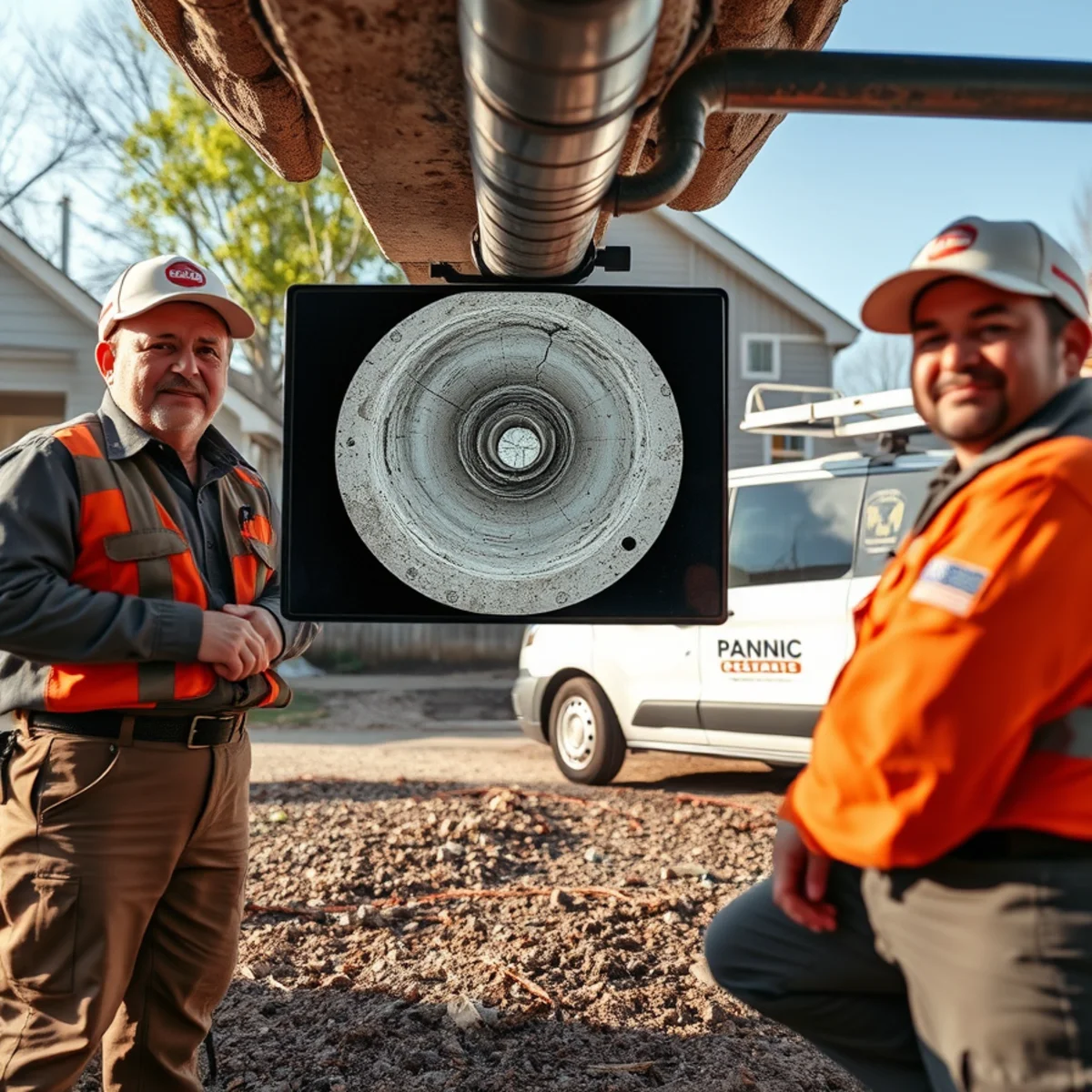
Conditions like these are why the camera goes in before the jetter, and why the footage can change the plan:
- Thin or crown-rotted walls: pressure can open a weak spot or take out a section.
- Cracks and separated joints: water forced into an open joint escapes into the soil and can wash away the ground around the pipe.
- Offset joints and sags: a joint that has dropped out of line can snag a nozzle or a cable, and neither method corrects the slope.
- Collapsed sections and old patches: a crushed stretch, a rubber coupling from an earlier repair, or a switch from cast iron to clay at the property line are all weak points that high pressure can find.
- Clay segments with cracked or shifted joints: brittle clay can fracture or pull apart under pressure.
Expert tip: If a company recommends jetting a 1950s lateral, ask whether it has run a camera through the line, and ask to see the footage. Without that, the jetting is a guess about a pipe nobody has looked at.
What Happens When the Camera Finds Damage
If the footage shows any of that, the plan changes. Sometimes a gentle pass at low pressure is still reasonable. Sometimes the right move is to open the blockage with a cable, stop cleaning, and fix the pipe: sewer line repair for an isolated defect, or trenchless sewer repair, meaning lining or pipe bursting, when the trouble runs along the line. Jetting a pipe you already know is failing buys a few clear months at the risk of a bigger repair, and that is not a plan.
Snaking is not risk-free on fragile pipe either. A cable can catch a failing joint, and a cutter can scar thin iron. The camera protects against both, which is why it comes first on any older Bellaire line with a history of backups.
What Each One Costs, and When the Cheaper Visit Isn't
Jetting costs more per visit than cabling because it takes more equipment, a water supply, longer setup, and more time on the line. Rough market ranges for Houston-area homes, not a quote: a cable visit often runs about $150 to $500, depending on whether it is one fixture or the main line, and hydro jetting commonly runs about $350 to $1,000, more for a long or heavily built-up line. A camera inspection is usually its own line item, often $150 to $400. The ranges overlap, because a stubborn main-line cabling can cost as much as an easy jetting.
Compare cost over a year, not per visit. A kitchen line that needs a cable visit three times in twelve months can cost as much as one jetting that keeps it clear far longer. Going the other way, jetting a line that only needed a ten-minute cable run is money spent on a service the pipe did not need.
What moves the number most is the length of the line, whether the home has a usable cleanout, how heavy the buildup is, and whether the visit is after hours. For either method, ask for a written estimate before work starts, and ask whether the camera is included or billed separately.
The Repeat-Clog Signal: When Neither Method Is the Answer
One clog is an event. The same drain clogging a second time in a year is a pattern. A third time means the pipe, not the household, is the problem. If you are choosing between snaking and jetting for the second or third time on the same line, the better question is why the line keeps filling, and a camera answers it better than a different tool will. These signs point past either method:
- The cable or jetter stops at the same distance every time. A hard stop in the same place often means a root mass, an offset joint, or a collapse rather than a clog.
- Rust-colored grit, flakes, or chunks of iron come out with the debris. That is the pipe itself coming apart.
- More than one fixture is involved: a tub gurgles when the washer drains, or the lowest drain in the house backs up first. That points to the main lateral, not one branch.
- A soggy or sunken strip of yard along the line's path, or a sewage smell outside.
- Clearing works, but only for a few weeks, whichever method is used.
Expert tip: Any of these calls for a camera and an honest look at the pipe. From there the options are a repair of the failing section, lining or bursting for a longer run, or, on a sound pipe with nothing worse than buildup, a jetting schedule. Our guides to why Bellaire drains keep clogging, tree roots in a sewer line, and cast iron sewer repair or replacement go deeper on each cause.
A Simple Decision Path for a Bellaire Home
Put together, the choice usually runs in this order:
- 1One slow fixture, first time, nothing else wrong: snake it. If it clears and stays clear, stop there.
- 2The same drain a second time within a year, or a clog back within weeks: get a camera on the line before choosing anything.
- 3Camera shows grease, scale, or roots on a round, sound pipe: hydro jet it, then ask about a yearly or every-other-year schedule if oaks sit over the lateral.
- 4Camera shows cracks, offsets, a collapse, or thin iron: clear the blockage the gentlest way that works, then plan the repair. A failing pipe does not get better with cleaning.
- 5Sewage already coming up in a tub or floor drain: treat it as a sewer backup emergency. Stop using water and call, and choose the method after flow is restored.
Questions to Ask Before You Approve Either One
Whichever method is on the table, these questions separate a diagnosis from a sales pitch:
- 1Will you run a camera before and after, and can I keep the footage?
- 2What in the footage or the clog history makes this the right method for this pipe?
- 3If you are jetting, what pressure and nozzle will you use on a pipe this age?
- 4How will you get into the line: an existing cleanout, a pulled toilet, or the roof vent?
- 5If the camera shows damage mid-job, what happens next and what do I owe?
- 6Is the price written down before you start, and does it include the camera?
Expert tip: Both a cable machine and a jetter ride on our trucks, so on a drain cleaning call the method follows what the camera shows, not what happens to be loaded. Call us for a camera look and a written estimate on your own line.
Frequently Asked Questions
Is hydro jetting better than snaking?
Can hydro jetting damage old cast iron pipes?
How much more does hydro jetting cost than snaking?
Will hydro jetting get rid of tree roots for good?
How often should a Bellaire home with cast iron drains be jetted?
Can I snake or jet a drain myself?
Written by the Plumber Bellaire TX team
Licensed Texas master plumbers based on Newcastle Street in Bellaire. We’ve spent years working the slab leaks, repipes, and sewer lines this article covers — right here in the City of Homes.
(614) 830-0578