Project Brays: What the $480M Bayou Project Means for Bellaire Homes
Ask a longtime Bellaire homeowner about Brays Bayou and Project Brays usually comes up in the same breath. It's the Harris County Flood Control District's decades-long, roughly $480 million effort to widen and deepen the bayou channel, and after 2015, 2016, and Harvey, it's the project most homeowners are counting on to keep water out of their homes.
It has genuinely changed the bayou's capacity. It has not changed the fact that Bellaire sits on slow-draining clay in a low, flat watershed, or that plumbing systems can back up from heavy rain with no bayou overflow involved at all. Here's what the project actually did, and what it didn't.
What Project Brays Actually Is
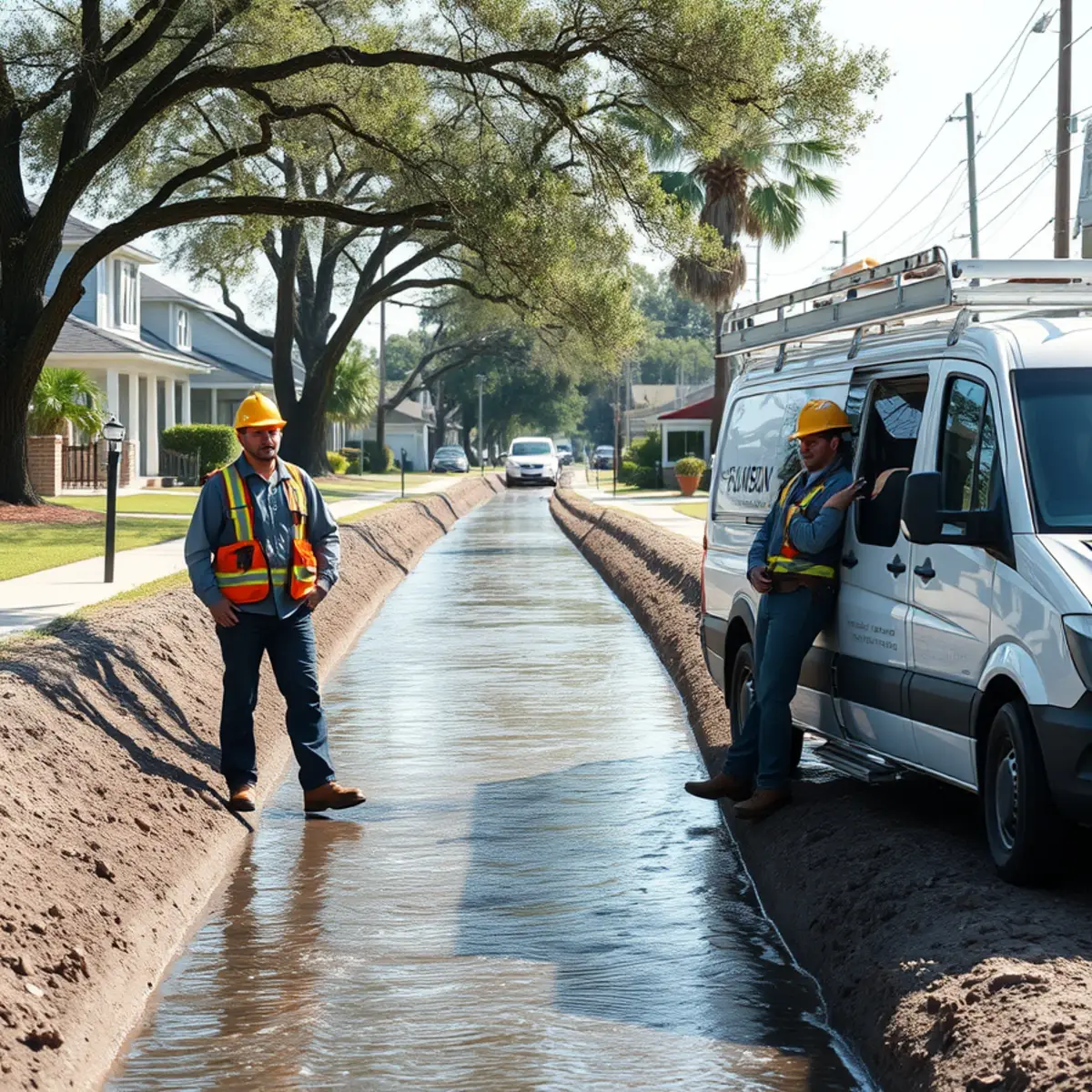
Project Brays is a Harris County Flood Control District initiative to widen and deepen the Brays Bayou channel, replace or raise dozens of low bridges that used to act as bottlenecks during high water, and build stormwater detention basins upstream to hold excess water during a storm instead of sending it straight downstream. Planning and early construction stretch back to the 1990s, with the bulk of the work carried out through the 2000s and 2010s at a total cost of roughly $480 million, funded jointly by the flood control district, the city, and federal partners. HCFCD marked the project substantially complete in 2021.
Did It Work?
By HCFCD's own modeling, the widened channel and added detention capacity meaningfully reduced the flood risk for tens of thousands of structures that previously sat inside the 100-year floodplain along the bayou — a real, measurable improvement over the channel that existed in 2015 and 2016. But reduced risk is not no risk. The project was engineered around a defined design storm, and Harvey dropped rainfall far beyond that benchmark across the watershed in 2017. No channel-widening project is sized for every possible storm, and Houston has shown a habit of exceeding expectations in the wrong direction.
Homeowners sometimes read "substantially complete in 2021" as a finish line rather than a baseline. It's closer to the second: a new standard the channel is now built and maintained to, not a guarantee about any specific future storm. Comparing today's channel to what existed during the 2015 and 2016 floods is useful and encouraging. Comparing it to zero risk, or treating the project as the end of the flood conversation for a bayou-adjacent home, is a mistake we still see homeowners make when deciding how much to invest in their own plumbing's flood readiness.
How Channel Widening and Detention Actually Reduce Risk
It helps to understand the mechanics, because "widened the channel" undersells what the project did. HCFCD deepened and widened long stretches of the bayou channel throughout the watershed to move a larger volume of water through the system before it tops the banks, and paired that with upstream detention basins — large excavated areas designed to sit dry most of the year and fill temporarily during a storm, holding back stormwater and releasing it slowly once the peak has passed downstream through Bellaire. The two approaches attack the same problem from both ends: more channel capacity to carry water, and less peak volume arriving all at once.
The project also replaced or raised dozens of old low bridges that crossed the bayou. Those bridges weren't just inconvenient during high water — their undersides acted as a physical bottleneck, restricting how much water could pass beneath them and backing up flow for the streets just upstream of each crossing. Raising or rebuilding a bridge doesn't show up as dramatically as a wider channel on a map, but for the streets immediately above certain crossings, it was one of the more consequential parts of the whole project.
None of this infrastructure runs on autopilot, either. HCFCD performs ongoing channel maintenance — mowing banks, clearing debris and sediment, inspecting detention basin outlets — because a widened channel or a basin that's silted in doesn't perform the way its original design intended. That maintenance cycle is part of why the project's protection holds up over time rather than quietly degrading the year after the ribbon-cutting.
Why Plumbing Prep Still Matters After Project Brays
The improvements along the bayou address bayou overflow specifically — water leaving the channel and moving into streets and homes. They do very little for the separate risk of sewer backup, which happens when heavy rainfall overwhelms the municipal sewer system's capacity, independent of whether the bayou itself ever leaves its banks. A home can take on sewage through a floor drain during an intense rain event even in a year Brays Bayou stays well within its new channel.
Slab leaks and foundation movement are a different risk again, driven by the expansive clay under the whole region rather than by bayou levels at all — a separate problem Project Brays was never designed to touch. Homes along Braeswood, sitting right along the bayou's edge where some of the channel work and detention basins are most visible, are a good example of a neighborhood that benefits from the project and still needs standard flood-ready plumbing.
Insurance is where this distinction matters most in practice. Whether flood coverage is required or optional for your specific address, most standard homeowner's policies still exclude water that backs up through a drain or sewer absent a specific endorsement — coverage for that scenario varies by policy, so it's worth confirming directly with your carrier rather than assuming your existing policy already handles it.
What Homeowners Should Still Do
- Keep a backwater valve on the main sewer line regardless of how far you sit from the bayou's new channel
- Carry flood insurance year-round — FEMA flood maps have shifted some areas out of the mandatory-purchase zone post-project, but not required isn't the same as no risk
- Have your sewer lateral camera-inspected periodically, especially if your home flooded before 2021 and may have old silt or damage in the line
- Elevate a water heater or HVAC equipment out of a garage floor level where the layout allows it
Reading Your FEMA Flood Zone After the Remap
Project Brays' completion triggered updated flood mapping for parts of the watershed, and that remapping is worth understanding on its own terms before deciding it changes anything about how you plumb your home.
Checking your zone takes a few minutes on FEMA's public flood map service using your address, and it costs nothing — worth doing whether you're buying, selling, or simply renewing a policy.
- Zone AE means a 1-in-100 annual chance of flooding (the "100-year floodplain"), and mortgage lenders typically require flood insurance for a home mapped into it
- Zone X (shaded) carries a reduced but non-zero risk — often the zone homes get remapped into after a project like this — and flood insurance becomes optional rather than required
- Zone X (unshaded) is the lowest mapped risk category, outside both the 100-year and 500-year floodplains
- A remap can move your specific address between zones even when a neighbor's lot doesn't change, so check the parcel directly rather than assuming based on the street
- None of these zones account for sewer backup risk, which is a separate mechanism from bayou-stage flooding and isn't part of the FEMA flood map at all — a periodic camera inspection through our sewer line repair service is the only real way to check your lateral's condition independent of flood zone
Don't Let the Project's Success Lower Your Guard
We help homeowners across the Brays Bayou watershed sort out what actually changed for their specific address versus what's still standard prudence. If you want a plumbing system set up for whatever the next storm brings, our flood & storm plumbing service covers backwater valve installation, sewer camera inspection, and storm-prep checks for homes along the bayou corridor.
Expert tip: Reduced floodplain risk on a map is not the same as zero risk on your street. Treat Project Brays as a real improvement, not a reason to skip flood-ready plumbing.
Frequently Asked Questions
Does Project Brays mean Bellaire won't flood again?
Has my flood zone changed because of the project?
Do I still need a backwater valve if I live near the improved sections of the bayou?
What's the difference between bayou flooding and sewer backup?
What does FEMA Zone X mean for my flood insurance requirement?
Written by the Plumber Bellaire TX team
Licensed Texas master plumbers based on Newcastle Street in Bellaire. We’ve spent years working the slab leaks, repipes, and sewer lines this article covers — right here in the City of Homes.
(614) 830-0578