7 Signs Your Bellaire Home Needs a Whole-House Repipe
The shower that used to feel strong now feels like a drizzle. The hot water runs faintly orange for the first few seconds. A plumber patched a pinhole behind the hall bath two years ago, and last month a stain started spreading across the garage ceiling. Each problem has its own cheap-sounding explanation, so each one gets handled separately while the real cause keeps working in the background.
In Bellaire, that pattern usually points to supply pipe at the end of its service life. Most homes built from the 1940s through the early 1960s were plumbed in galvanized steel, which rusts from the inside out, and many 1960s and 70s homes carry early copper with aging problems of its own. No single symptom below proves you need a repipe. Two or three together usually do. Here are the seven signs, what each one means inside the pipe, and what to do next, including the cases where a cheaper fix is the right one.
The 7 Signs at a Glance
- 1Weak flow at several fixtures, not just one
- 2Rust-colored or discolored water, especially from the hot taps
- 3Repeated pinhole leaks in different spots
- 4Original pipe in a home built before about 1960
- 5A metallic taste or rust flecks in the water
- 6Pressure that collapses when two fixtures run at once
- 7A growing history of patch repairs
Why Bellaire Supply Pipe Reaches the End of the Line
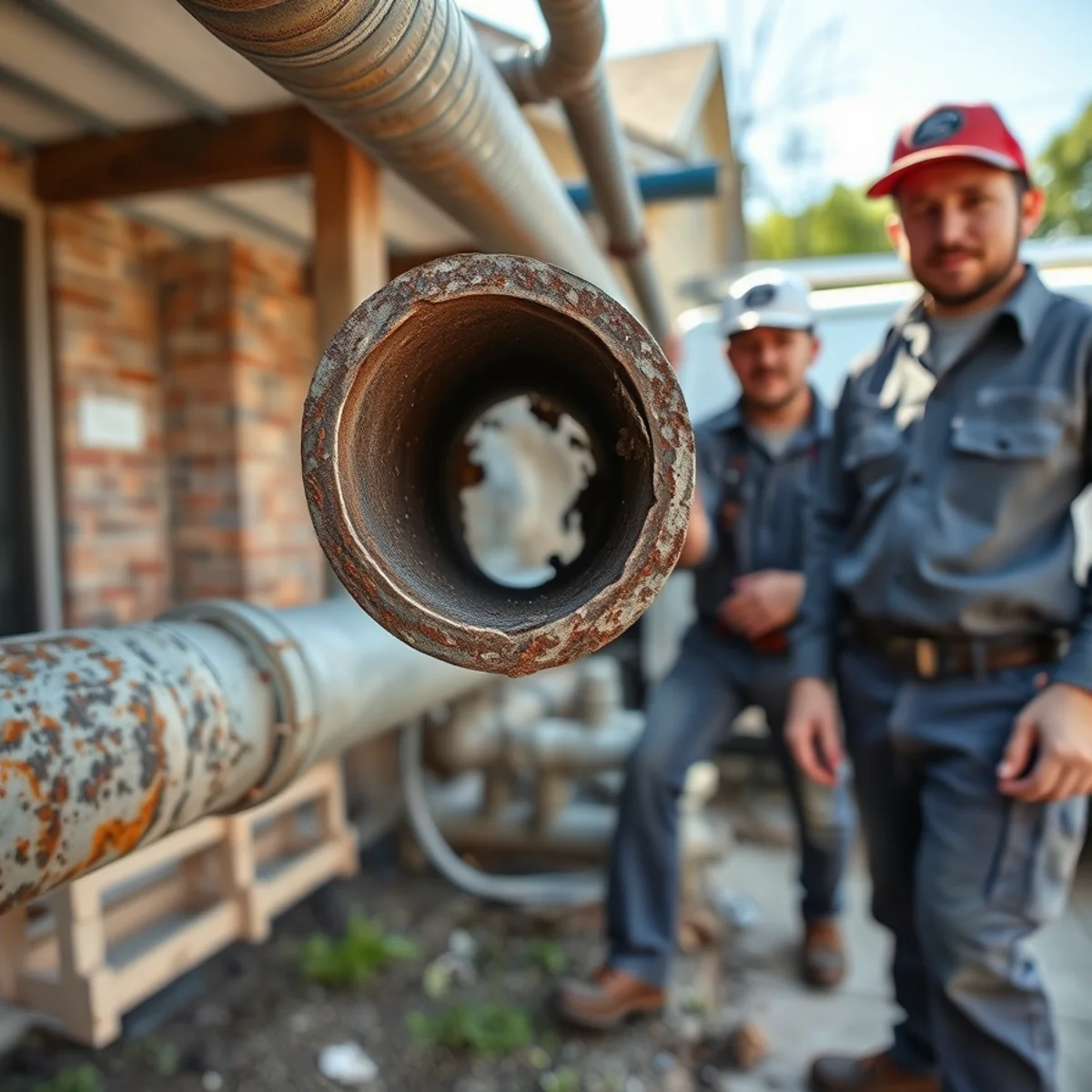
Galvanized steel is steel pipe with a zinc coating meant to stop rust. Over decades the coating wears off the inside, bare steel corrodes, and minerals in the water settle onto the rough surface. The usual rule of thumb is a service life of 40 to 60 years, and a 1955 Bellaire ranch is now more than 70 years old. Local conditions speed the process: moderately hard water leaves scale, hot lines corrode faster than cold because heat accelerates rust and scale alike, and the black gumbo clay under every slab swells and shrinks with the weather, stressing joints on any line in or under the foundation. The pipe ends up thinner at the wall and narrower in the bore, so it both leaks and restricts. Those two failures explain all seven signs.
Sign 1: Weak Flow at Several Fixtures
One weak shower is a showerhead, a worn cartridge, or a clogged aerator. Weak flow at the kitchen sink, the hall bath, and the washing machine fill means water is struggling through the pipes that feed all of them. Scale narrows a galvanized line from the inside, so a pipe that started at three-quarters of an inch can end up passing only a fraction of its original flow. Homeowners often say the house "always had weak water," because the change was too slow to date.
What to do: rule out the cheap causes first. Clean the aerator, check for a partly closed shutoff, and have the pressure-reducing valve where the line enters the house tested. If the weak flow survives all that and is worst upstairs or at the far end of the house, suspect the pipe. Our guide to galvanized pipes and low water pressure shows how pressure readings at the main and at the fixture confirm it.
Sign 2: Rust-Colored Water, Especially From the Hot Taps
Brown, orange, or yellow water is iron from corroding steel. The hot side usually shows it first, and the color is worst after the water has sat, like the first draw in the morning or after a weekend away.
What to do: fill one clear glass from a cold tap and one from a hot tap and compare them against a white background. If only the hot water is discolored, start with the water heater, since a spent anode rod and a corroding tank produce the same color (see the signs your water heater is failing). If both are discolored, especially first thing in the morning, the supply pipes are the likely source. Color that clears in a few minutes and shows up at the neighbors' houses too is usually the city flushing a main. If it keeps coming back, don't wait it out. Corroded pipe does not heal.
Sign 3: Repeated Pinhole Leaks
A pinhole leak is corrosion that has eaten through the pipe wall from the inside. The pipe did not fail at a random spot. It failed at the first place the wall got thin, and the rest of that run is corroding at a similar rate, so the next pinhole is often a few feet or a few months away. The quiet versions are easy to miss: a spreading ceiling stain, musty drywall, a water bill that climbs for no reason, a faint hiss inside a wall. In a slab home, a leaking line under the foundation can show up as a warm spot on the floor, which calls for slab leak detection before anyone cuts concrete.
What to do: shut the water off at the main if a leak is active, get it repaired, and keep a written tally of where and when. One leak in an otherwise sound system is a repair. A second leak in a different spot within a couple of years, on decades-old pipe, is the point to price a whole-house repipe next to the repair and compare the two.
Sign 4: A Pre-1960 Home That Has Never Been Repiped
Age is a risk multiplier, not a verdict. Some 1950s Bellaire homes still have usable galvanized pipe, but at 65 to 75 years a system is far past the 40-to-60-year rule of thumb, and the odds of a failure rise every year. Planned work costs less than a burst line at 2 a.m.
What to do: confirm what you actually have, because remodels leave mixed systems, such as new copper in a redone kitchen and galvanized everywhere else. Check exposed pipe near the water heater or in the garage. Galvanized is dull gray with threaded joints, and a magnet sticks to it; copper is reddish-brown; PEX is flexible plastic in red, blue, or white. Copper tied straight into galvanized without a dielectric fitting sets up galvanic corrosion at the joint, so mixed runs deserve a closer look.
Galvanized isn't the only pipe with an expiration date. Polybutylene, a gray or blue plastic common from the late 1970s into the mid-1990s, has a poor record at its fittings, and copper in homes built before 1986 may have lead-containing solder. Either is a reason to have a plumber assess the system before anything leaks.
Sign 5: A Metallic Taste or Rust Flecks
If the water tastes like pennies, or you keep finding grit in aerator screens, washing machine inlet filters, or the bottom of a white sink, the pipe is shedding. Decades of scale break loose in flakes, especially after a pressure surge or work on a nearby line, and the flakes lodge in the first screen they reach. That is why a faucet you have cleaned twice keeps clogging.
What to do: save a dated sample by running a tap through a coffee filter. Iron in household water is generally treated as an aesthetic problem rather than an acute health risk, but a system that sheds rust is failing, and older plumbing can also carry other metals in solder and fittings. If you are concerned about what is in your water, a certified lab can test it.
Sign 6: Pressure That Collapses When Two Fixtures Run
Start a shower, then flush a toilet or run the kitchen sink. If the shower weakens badly or swings hot or cold, the pipe can't carry enough water for two uses at once. This differs from sign 1 because each fixture can seem fine alone. A restricted pipe can deliver good pressure to one open tap and fall apart under demand, since friction in a narrowed bore climbs as more water moves through it. It also means a gauge on an outdoor spigot can fool you: with no water flowing, it reads supply pressure and looks healthy.
What to do: note which combinations fail, such as shower plus washer, and tell the plumber. A proper diagnosis compares pressure at the main and at an inside fixture while another fixture runs. Many older Bellaire homes also have half-inch trunk lines feeding the whole house, and a modern repipe typically steps those up so two showers and a washer can run together.
Sign 7: A Growing History of Patch Repairs
Add up the calls: a leak under the kitchen two years ago, a fitting at the water heater last year, a fix behind the washer this spring. Each repair was reasonable. Together they describe a system failing faster than it can be patched, and each patch leaves a different material behind, such as copper here and PEX spliced into galvanized there, with a new transition where corrosion or a weak joint can start.
What to do: do the math. A single galvanized leak repair often runs a few hundred dollars to a couple of thousand depending on access, before any drywall, flooring, or insulation damage. Two or three of those in a few years approach the cost of fixing the whole system once. Our repipe cost breakdown shows typical numbers: whole-house repipes in the Bellaire area generally run $4,000 to $10,000, with smaller homes starting around $4,500, confirmed in a written estimate. Also ask your insurance agent what they require. Some carriers ask about the age and material of supply plumbing, and a history of water claims can complicate a renewal.
When It Probably Isn't a Repipe
Not every plumbing complaint in an old house means the supply system is finished, and an honest plumber will tell you so. These look similar but have cheaper answers:
- One fixture only. A clogged aerator, a worn cartridge, or a partly closed angle stop.
- Rusty hot water with clear cold water. Usually the water heater tank or its anode rod, not the house pipes.
- High or erratic pressure with banging pipes. Often a failing pressure-reducing valve, a small and inexpensive part.
- One isolated leak on otherwise sound pipe. Repair it and move on, especially on newer copper or PEX.
- Brief discoloration after street work. The city flushing or repairing a main.
Expert tip: Ask the plumber to show you the evidence: pressure readings at the main and at a fixture, the actual pipe material, or the failed section once it is cut out. A repipe recommendation should come with something you can see.
How Many Signs Is Enough?
One sign is a reason to investigate. Two or three together, such as weak flow, discolored hot water, and a home built before 1960, are a reason to get a repipe assessment. A confirmed second leak, or any sign alongside visible leak damage, shouldn't wait: planned work costs less than an emergency repair, and a supply line that fails while no one is home can do serious damage before anyone notices.
An assessment is a short visit. We confirm the pipe material, check pressure at the main and at the fixtures, count the fixtures and bathrooms, look at the foundation type and attic access, and then give you a written, itemized estimate. The choice that follows is usually between two materials. PEX repiping is our usual recommendation because the tubing flexes through existing wall cavities with fewer joints and tolerates our clay-soil movement. Copper repiping is the traditional alternative, favored by some owners for exposed runs and its long track record. Either way, whole-house repiping typically takes two to four days with the household staying in the home, and the work is permitted through the City of Bellaire.
The conversation comes up constantly in older, oak-shaded pockets like Bellaire Oaks, where 1950s ranch homes were plumbed in galvanized steel under the same canopy that keeps their sewer laterals busy. If two or more of these signs sound familiar, call us for a repipe assessment and a written estimate before the next leak makes the decision for you.
Frequently Asked Questions
How do I know if my Bellaire home has galvanized pipes?
How long does galvanized pipe last?
Can I repipe just the worst part of the house?
Is rusty water from my tap safe to drink?
How much does a whole-house repipe cost in Bellaire?
Written by the Plumber Bellaire TX team
Licensed Texas master plumbers based on Newcastle Street in Bellaire. We’ve spent years working the slab leaks, repipes, and sewer lines this article covers — right here in the City of Homes.
(614) 830-0578