Trenchless vs. Traditional Sewer Line Repair in Bellaire
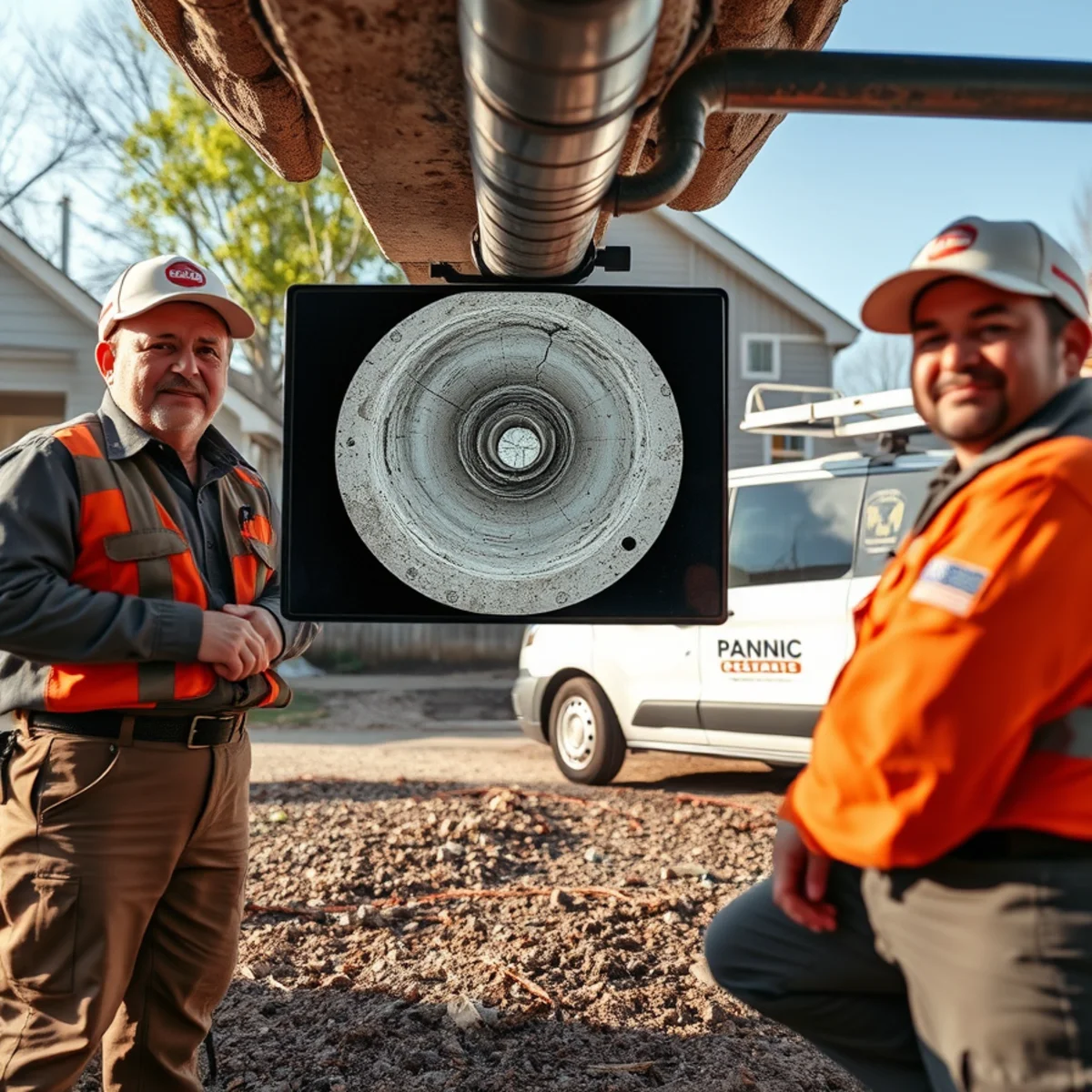
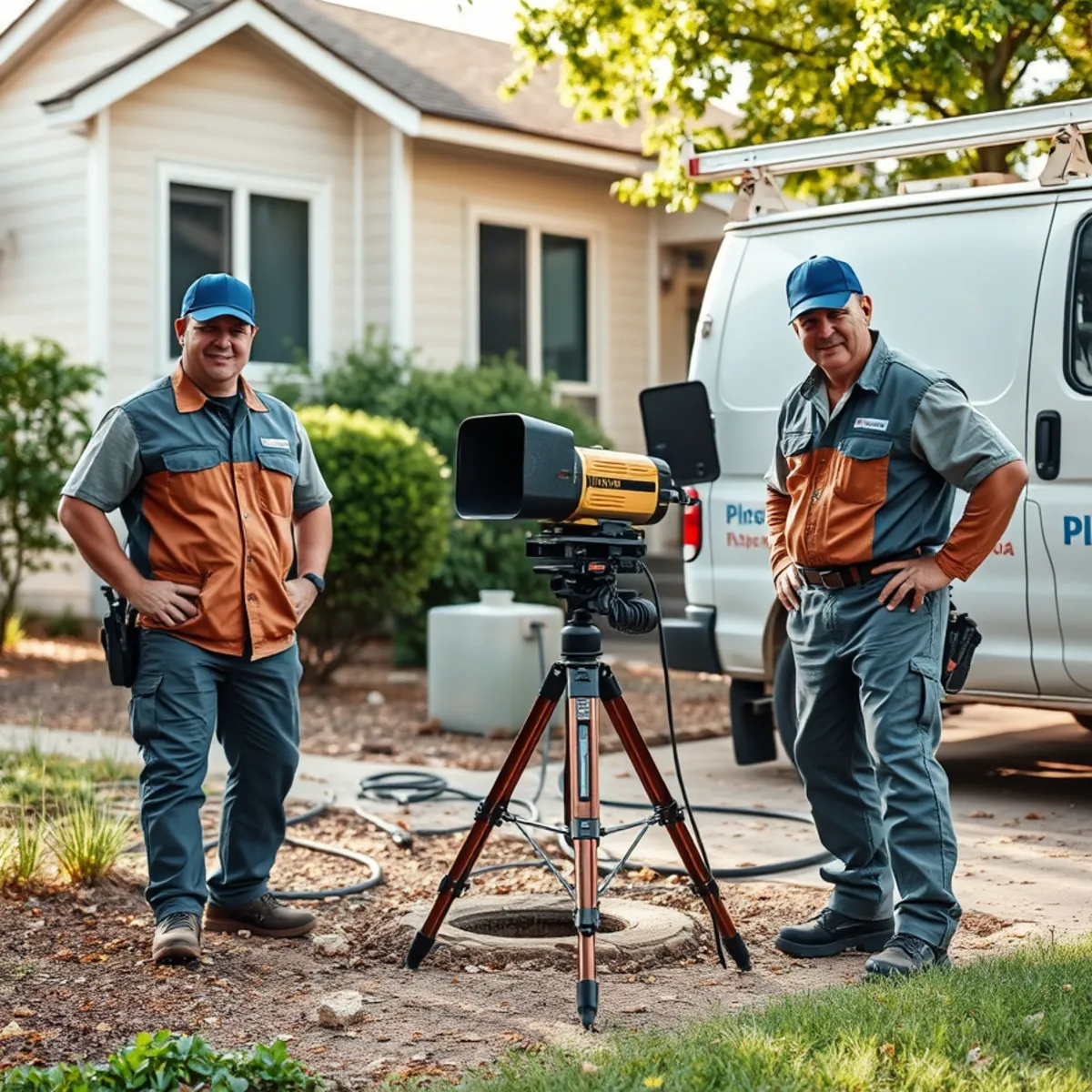
A camera has shown you the problem: a cracked, scaled, or root-choked sewer line. Now the quotes are in, and one plumber says trenchless while another says dig. Each has a reason. Trenchless protects your yard and driveway. Digging lets a crew see and fix everything. Neither is always the better answer, and a company that insists on one method for every line is probably describing its equipment, not your pipe.
This comparison covers how each method works, what it costs once the yard is restored, how long it takes, when trenchless isn't possible, and which one tends to suit a Bellaire cast iron lateral from the 1940s through the 1970s. The decision should follow the camera footage, not a sales preference.
Two Ways to Fix a Sewer Line
Traditional repair, also called open-trench or dig-and-replace, exposes the pipe by excavating along its path. The crew removes the failed section or the whole run, lays new pipe at the correct slope on a prepared bed, and backfills the trench. Trenchless repair works through the cleanout or a couple of small access pits and comes in two main forms: lining, which creates a new pipe inside the old one, and pipe bursting, which pulls a new pipe along the old path while breaking the old one apart.
Both can produce a new, code-compliant line, and both go through a City of Bellaire permit and a final camera pass. What differs is what each can fix, what each costs once the yard is restored, and what each does to everything above the pipe. Our trenchless sewer repair service covers lining and bursting, and our sewer line repair service includes open-trench work for lines that call for it, so the recommendation is never tied to one method.
How Open-Trench Repair Works
Before anyone digs, underground utilities are located through Texas811 and the permit is pulled. The crew excavates to the pipe, by machine along long runs and by hand near the foundation and other utilities. Deeper trenches need shoring, and in this flat, clay-heavy part of Harris County a trench can fill with groundwater after a heavy rain, so pumping is part of the job. The old pipe comes out, new PVC goes in on a bed of sand or gravel at the right fall, and the trench is backfilled and compacted.
The strength of open-trench repair is that everything is visible. The crew can reset a belly to the right slope, replace every bad section in one pass, deal with a collapse, add a cleanout where the line never had one, and make clean connections at the house and at the city tap. It is the only method that reliably fixes a pipe with the wrong grade, and on a short, accessible run in an open yard it is often the most economical.
The price of that visibility is everything above the pipe. A trench cuts through lawn, beds, irrigation, and any concrete in the path. Backfill matters too: black gumbo clay is hard to compact, and fill packed poorly settles over the following months, leaving a low strip in the lawn or a sunken patch beside a slab. Ask how the crew compacts backfill, in layers, before the dig starts.
How Trenchless Repair Works: Lining and Pipe Bursting
Cured-in-place pipe (CIPP) lining. The line is cleaned first, with jetting and cutters to clear roots and scale. A flexible liner saturated with resin is then pulled or inverted into the old pipe, pressed against its walls, and cured with hot water, steam, or UV light until it hardens into a smooth, jointless pipe inside the old one. Branch connections are reopened from the inside. Lining works best when the old pipe still holds a continuous, round shape: corrosion, scale, roots entering at joints, and small cracks are good candidates.
Pipe bursting. A bursting head is pulled through the old line between two access pits, fracturing the old pipe outward into the surrounding soil while a continuous new pipe, usually fused HDPE, follows it in. The result is a new full-diameter pipe on the old route. Bursting suits pipe that is too far gone to line, such as heavily scaled, cracked, or root-choked lines, and it is commonly used on brittle materials like clay and cast iron.
Either way, the work happens from small pits or existing cleanouts instead of a trench the length of the yard, which is why trenchless lining and pipe bursting so often win under oaks, driveways, and finished landscaping.
Cost: Per-Foot Price vs. Finished Price
Trenchless usually costs more per foot of pipe than a plain trench, because of the specialized equipment, liners, and fused pipe involved. Compare only that number and open-trench wins. The comparison that matters is the finished price: the pipe work plus restoring everything that was disturbed.
Think of each quote as two halves. An open-trench quote covers excavation, shoring and pumping where needed, pipe and fittings, bedding and compacted backfill, and then restoration: removing and re-pouring concrete, replacing sod or beds, repairing irrigation, and any fence or tree work. A trenchless quote covers access pits, cleaning and prep, the liner or the bursting pipe, curing or pulling equipment, reconnecting branch lines, and a final camera pass, with restoration limited to a couple of small pits. Open-trench usually wins the first half. Trenchless usually wins the second.
That is why the answer flips with the property. A short lateral through an open back lawn often costs less to dig. A long lateral under a concrete driveway, a patio, or the root zone of a mature oak often costs less to line or burst once demolition, re-pouring, and landscaping land on the open-trench side of the ledger. Get both methods priced side by side, with restoration itemized, in a written estimate. Our guide to sewer line replacement cost in Bellaire explains how the camera inspection feeds that number.
Time and Disruption
Trenchless jobs are usually measured in a day or two on site, including pit work and resin curing or the pull-through. Open-trench jobs run longer, often several days of excavation, pipe work, inspection, and backfill, and then restoration stretches the finish line further: concrete has to cure, and sod has to be laid and watered. Weather and inspector scheduling can add a day or two to either method.
Either way, expect to stay off toilets, showers, and drains for part of a day while the line is out of service, and longer on an open-trench job. Ask your plumber to sequence the work around your household.
Oaks, Driveways, and Landscaping: The Bellaire Factor
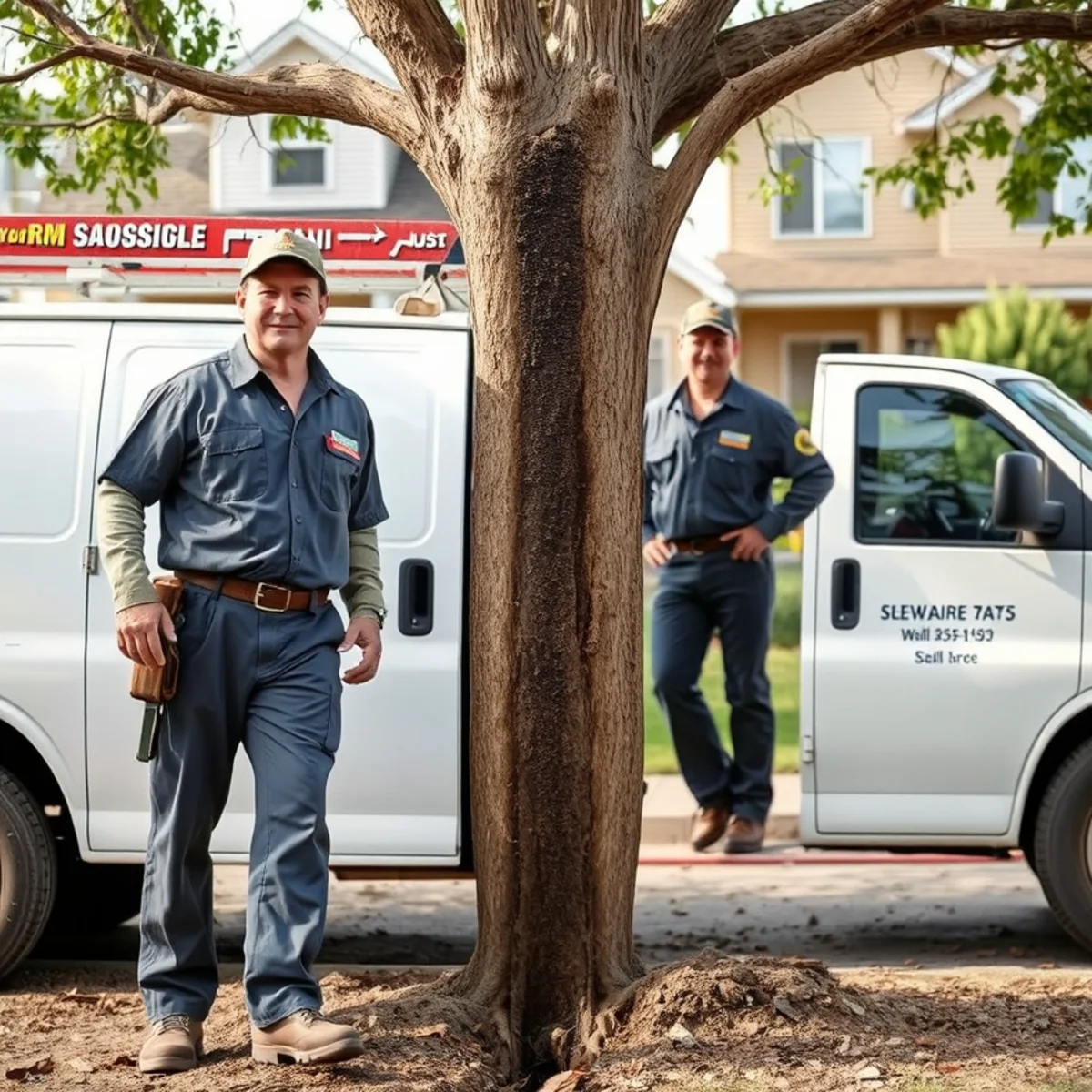
This is where Bellaire's streets change the math. Many lots carry decades-old oaks, and the sewer lateral often runs well inside the reach of their roots. Arborists commonly use a rule of thumb of about one foot of root-zone radius per inch of trunk diameter to mark the area to protect, and a trench through that zone cuts structural roots. The damage may not show for a season or two, and a stressed oak can cost more than the sewer repair that caused it.
Trenchless work lets the pits sit outside the root zone wherever the layout allows, which makes it the gentler option for the tree. It does not make the tree irrelevant: roots already growing through the pipe must be cleared from inside before lining, and an open-trench job near a mature tree needs its trench path and any city requirements settled before the first shovel. Our guide to tree roots in your sewer line explains how roots find the pipe in the first place.
Driveways and patios follow the same logic. Open-trench work under concrete means sawing, removing, and re-pouring the slab, and a new pour rarely matches the old in color or texture. Fences, irrigation, and patio or pool plumbing in the path become line items too. In oak-shaded neighborhoods like Bellaire Oaks, where 1950s laterals run under mature canopy, that restoration side of the ledger is often what makes trenchless the practical choice.
When Trenchless Isn't Possible
Trenchless is not a universal fix, and an honest recommendation says so. These conditions usually require digging at least part of the line:
- A collapsed section. If the camera and cable can't pass, lining and bursting can't start. Expect a dig at the collapse, sometimes followed by trenchless work on the rest of the run.
- A significant belly. A sag deep enough to hold standing water is a grade problem, and neither a liner (which follows the old shape) nor bursting (which follows the old path) reliably resets the slope. That section is typically dug out and reset.
- A severe offset or voids around the pipe. Where joints have separated so far that the pipe is no longer a continuous, aligned tube, a liner can't bridge the gap and the washed-out soil has to be dealt with.
- Sharp bends and many fittings. Tight turns limit what can be pulled or lined through, and each one may need its own access pit.
- Very shallow pipe or crossing utilities. Bursting pushes soil outward, so shallow pipe or a gas or water line crossing close to the path can be heaved or damaged. Those spots get exposed by hand first.
Expert tip: Combination repairs are common and legitimate. It is normal to dig out a short collapsed or bellied section and line or burst the rest of the run. If a company offers only one method for every sewer line it quotes, ask why.
Lifespan: What Each Method Buys You
Both approaches replace a failing 50-to-75-year-old cast iron pipe with materials that don't rust. New PVC, fused HDPE, and a properly installed structural liner are all commonly cited with design lives of 50 years or more, but the specifics depend on the product, so ask for the manufacturer's documentation and the installer's workmanship warranty in writing, and ask about the two separately.
The differences are subtle. PVC laid in a trench has a joint every 10 to 20 feet, and gasketed joints installed correctly resist roots well, but they are still joints. Bursting installs fused HDPE with no joints along the run, and a liner leaves none within the lined stretch, though its ends and branch connections must be sealed properly. Flexible pipe also tolerates black gumbo's shrink-swell better than rigid cast iron did, which is why the old joints let go.
One question is worth asking on any lining quote: is it a full structural liner, designed to stand on its own if the old pipe keeps deteriorating, or a thin coating meant mainly to seal? They are different products with different expectations.
Which One Fits a Bellaire Cast Iron Sewer Line
Most Bellaire homes built from the 1940s through the 1970s have cast iron sewer laterals, sometimes changing to clay at the property line. After 50 to 80 years that pipe is typically scaled inside, cracked or offset at the joints, and open to roots. Every sewer line replacement decision on these lines starts with the camera, which sorts the cases:
- Scaled and rough, roots at a few joints, but round and continuous: lining is often a strong fit after jetting and root removal, especially under trees and hardscape.
- Cracked, thin, or root-choked along much of its length: bursting replaces the whole lateral at full diameter without a yard-long trench, and open-trench is the alternative where bursting can't be done.
- Bellied, collapsed, or badly offset in places: dig those sections, then line or burst the rest if it is sound.
- A short, accessible run in an open yard: open-trench may be the most economical and thorough choice.
- Failure under the slab: lining from the cleanout can sometimes treat it, where the alternative is tunneling or breaking out the floor.
Expert tip: Whichever method you choose, opening the line is the moment to add what it is missing: a properly placed cleanout and, near Brays Bayou where flood-driven backups are a real risk, a conversation about a backwater valve. Our Brays Bayou flooding history guide covers how those backups happen.
Questions to Ask Before You Choose
If sewage is already coming up in a tub or floor drain, that is a sewer backup emergency: stop using water, get the line cleared, and decide on a method afterward. Once things are stable, these questions separate a diagnosis from a sales pitch. For the repair-versus-replace call that comes before the method, see cast iron sewer repair or replacement.
- 1Did you run a camera the full length of the line, and can I see the footage?
- 2Which method are you quoting, and what in the footage makes it the right one?
- 3Can you price the other method too, with restoration itemized for each?
- 4What is the warranty on the pipe or liner, and what is the warranty on the workmanship?
- 5Who pulls the City of Bellaire permit, and will there be a final camera pass after the work?
- 6What happens if the job turns up something the camera didn't show?
Expert tip: Ask for the footage and keep a copy. A plumber confident in the diagnosis will walk you through it, and the recording can matter later if the line is questioned at a sale. If you are weighing quotes now, call us for a camera inspection and a written estimate that compares the methods your line can actually take.
Frequently Asked Questions
Is trenchless sewer repair always better than digging?
Will lining make my sewer pipe smaller?
Can a cast iron sewer line be lined or burst?
Do roots in the pipe rule out trenchless repair?
Written by the Plumber Bellaire TX team
Licensed Texas master plumbers based on Newcastle Street in Bellaire. We’ve spent years working the slab leaks, repipes, and sewer lines this article covers — right here in the City of Homes.
(614) 830-0578